Content
When a process engineer specifies an industrial vacuum chamber, the first question is rarely about the pump. It usually starts with the target pressure, the size of the parts that must fit inside, and the process that will run there. Those three variables drive most of the decisions that follow.
An industrial vacuum chamber is a sealed enclosure that removes gas molecules from its interior to create a controlled low-pressure environment. The practical challenge is not just pulling a vacuum; it is holding it reliably while the process inside does its work — coating, drying, bonding, or thermal cycling.
This guide explains how industrial vacuum chambers work, which shape and flange options fit which applications, and what to evaluate before you buy.
A vacuum chamber is defined by its ultimate pressure, pumping speed, internal geometry, and the materials used in its walls and seals. Pressure is expressed in Pascal (Pa) or Torr, and the operating range decides the level of engineering effort needed.
Rough vacuum covers pressures down to roughly 100 Pa and is used for simple drying and degassing. High vacuum operates in the 10-1 to 10-4 Pa range and is common in coating systems and semiconductor tools. Ultra-high vacuum works below 10-7 Pa and demands low-outgassing materials, all-metal seals such as CF flanges, and strict cleaning procedures.
Key takeaway: Specify the process pressure first, then verify that the chamber shell, flanges, and valves are rated for that pressure level.
Beyond pressure, the chamber body must be sized for the workpieces or fixtures that go inside. Wall thickness, weld quality, and surface finish all affect outgassing and the ability to reach low pressure. For most industrial processes, 304 or 316 stainless steel is the default material, while aluminum is common in large chambers where weight is a concern.
The chamber shape is often determined by the process, not by preference. Each geometry has strengths that matter in specific production settings.
| Type | Shape | Typical Use |
|---|---|---|
| Box | Rectangular | Thermal testing, batch fixtures, inspection tools |
| Cylindrical | Round with flat ends | Coating, drying, degassing, crystal growth |
| Spherical | Sphere | Space simulation, research, uniform pressure studies |
| Bell Jar | Dome with lift mechanism | Optical coating, laboratory R&D, small batches |
Box chambers are the most flexible when the workload includes fixtures or odd geometries. Cylindrical chambers are preferred in coating lines because the workpiece can rotate inside the pumping axis. Spherical chambers excel in applications that need uniform pressure distribution. Bell jars remain common in R&D and optical coating because the dome can be lifted quickly.
Industrial vacuum chambers are not limited to semiconductor fabs. They play a central role in aerospace testing, coating lines, food processing and energy equipment manufacturing.
In semiconductor manufacturing, chambers are used for deposition, etching, bonding and annealing. Third-generation silicon carbide (SiC) devices require controlled ultra-high vacuum conditions during epitaxial growth and wafer bonding. A properly designed high-vacuum and ultra-high-vacuum semiconductor chamber maintains the low base pressure and low outgassing that these processes need.
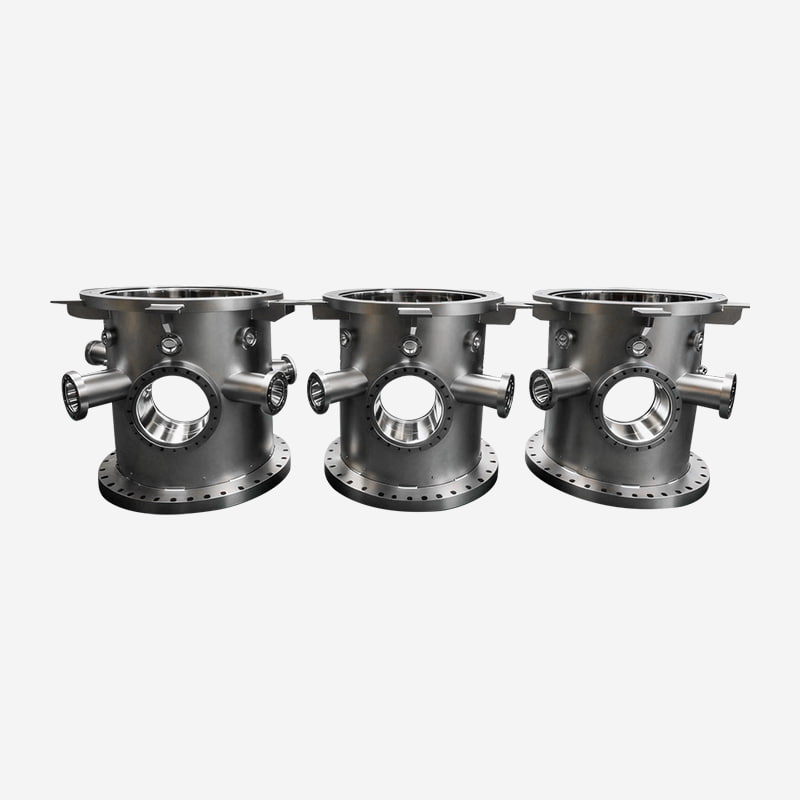 High Vacuum and Ultra-High Vacuum Chambers for Semiconductor ProcessesThese chambers meet HV and UHV standards and are helium leak-tested for ultra-low leak rates, supporting deposition, etching, bonding and annealing in semiconductor manufacturing.View Product →
Aerospace programs use vacuum chambers to simulate space conditions, test thermal cycling, and verify the performance of avionics, seals and structural materials. Chambers used in this sector often need to accommodate large fixtures and maintain stable temperature control. Aerospace vacuum chambers are designed with the rigidity and size needed for these demanding trials.
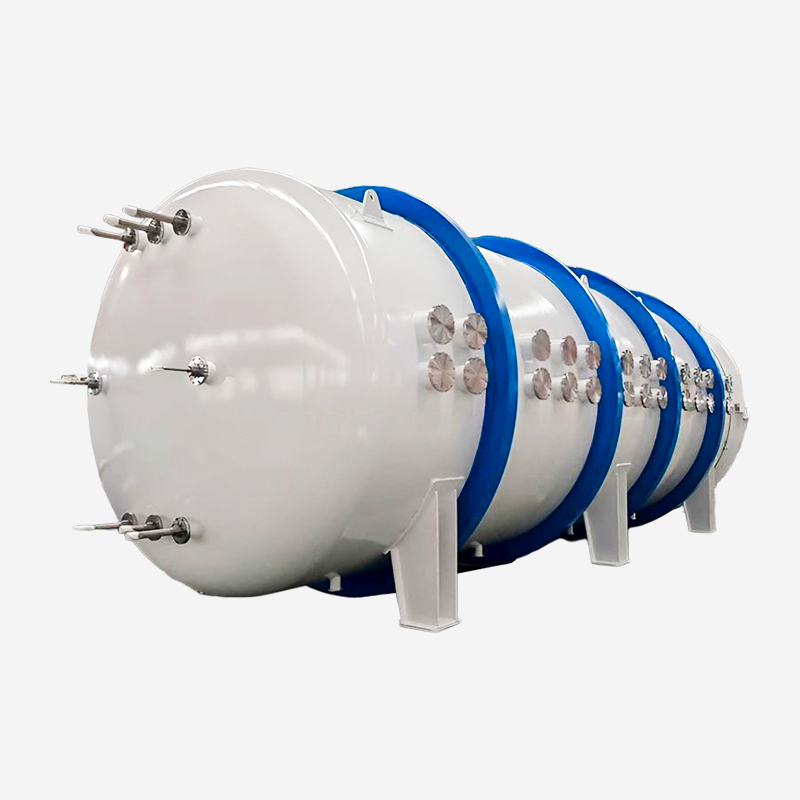 Aerospace Vacuum Chambers for Simulating Extreme Space ConditionsThese high-vacuum experimental chambers feature robust structural integrity and complex vacuum interfaces, suitable for thermal cycling and performance testing of aerospace components.View Product →
Coating lines for optics, automotive components and display panels depend on chambers that support sputtering, evaporation or PECVD processes. A continuous-line coating chamber helps preserve throughput while maintaining uniform film thickness across the substrate.
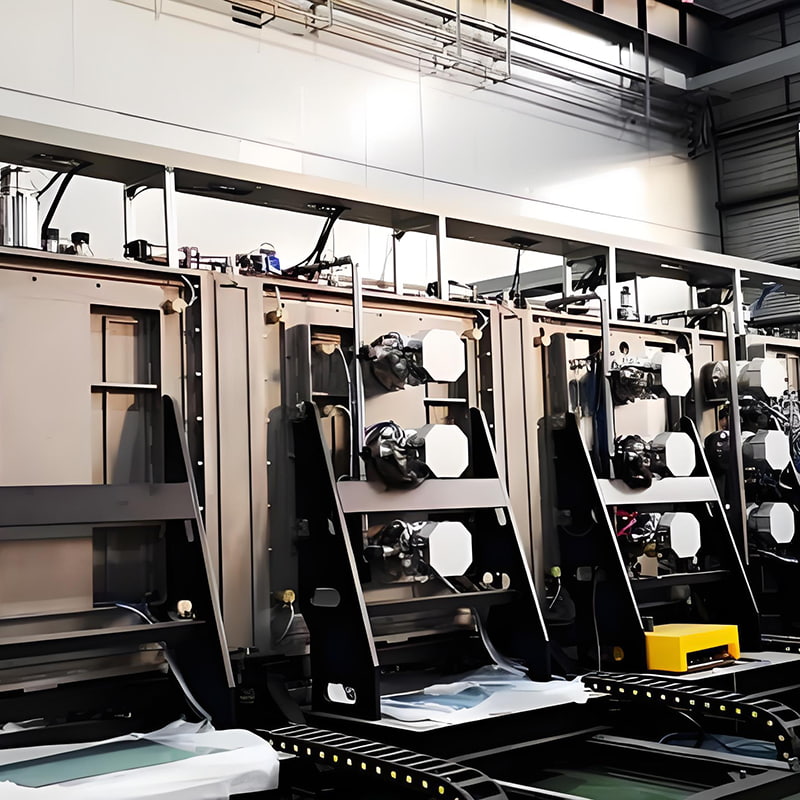 Continuous Line Coating Chambers for High-Volume Inline ProductionDesigned for continuous material flow and multi-layer coating, these chambers increase throughput and maintain uniform film thickness, ideal for optics, automotive, and display coating lines.View Product →
Freeze-drying, vacuum drying, and sterilization are typical applications in the pharmaceutical and food sectors. These processes run at moderate vacuum levels and often require stainless steel construction that meets hygiene standards.
Stainless steel is the most common material for vacuum chambers because it resists corrosion, has low outgassing, and is compatible with most process chemistries. Aluminum is used for large or mobile chambers where weight matters. Surface finish affects performance: a smoother interior reduces gas adsorption and makes cleaning easier, which is critical for ultra-high vacuum work.
Flange standards determine how easy it is to connect pumps, valves and gauges. KF flanges suit rough and high vacuum applications. CF flanges with copper gaskets support ultra-high vacuum. ISO flanges fit high-vacuum systems with larger bore sizes. The right flange also affects maintenance time and long-term leak rates.
The pumping system must match the volume and the gas load of the process. Oil diffusion pumps, turbomolecular pumps and dry pumps each have strengths. Valves must seal reliably at the required pressure and be chosen for their actuation method, cycle life and materials compatibility.
The chamber shell, flanges and internal fixtures have to be machined to tight tolerances so that seals seat correctly and stress is distributed evenly. Choosing a manufacturer with proven precision machining capabilities makes a measurable difference in the life and leak-tightness of the final chamber.
Before requesting a quote, write down these seven parameters. They cover most of the questions a supplier will ask.
If you can provide these values, a manufacturer can quickly estimate the chamber configuration, the pumping speed, and the cost range.
High vacuum typically covers the range from 10-1 Pa down to 10-4 Pa, which is enough for most coating and drying processes. Ultra-high vacuum (UHV) is below 10-7 Pa and requires low-outgassing materials, all-metal seals, and very careful surface preparation.
Use KF for rough and high vacuum systems with small bore sizes, CF for ultra-high vacuum with copper gasket seals, and ISO for high-vacuum systems requiring larger diameters. The choice also depends on how frequently the flange has to be opened and re-sealed.
Yes, but only if the chamber volume, pumping system, and interior finish are designed for the most demanding process among them. Switching from a high-temperature process to a low-outgassing process may require additional cleaning and bake-out time.
Evacuation time depends on the chamber volume, the pump speed, the gas load and the target pressure. To estimate it, suppliers usually calculate the effective pumping speed and the total outgassing area, then match that to the required pressure drop.
Choosing an industrial vacuum chamber is a system decision. The process pressure, the workload geometry and the process type set the boundaries for everything else — the material, the flange standard, the pumping configuration and the seal design.
Spend time on the specification before you compare vendors. Measure the parts that will go inside, confirm the target pressure and leak rate, and be clear about the process chemistry. With those facts in hand, the selection process becomes a matter of engineering fit, not guesswork.
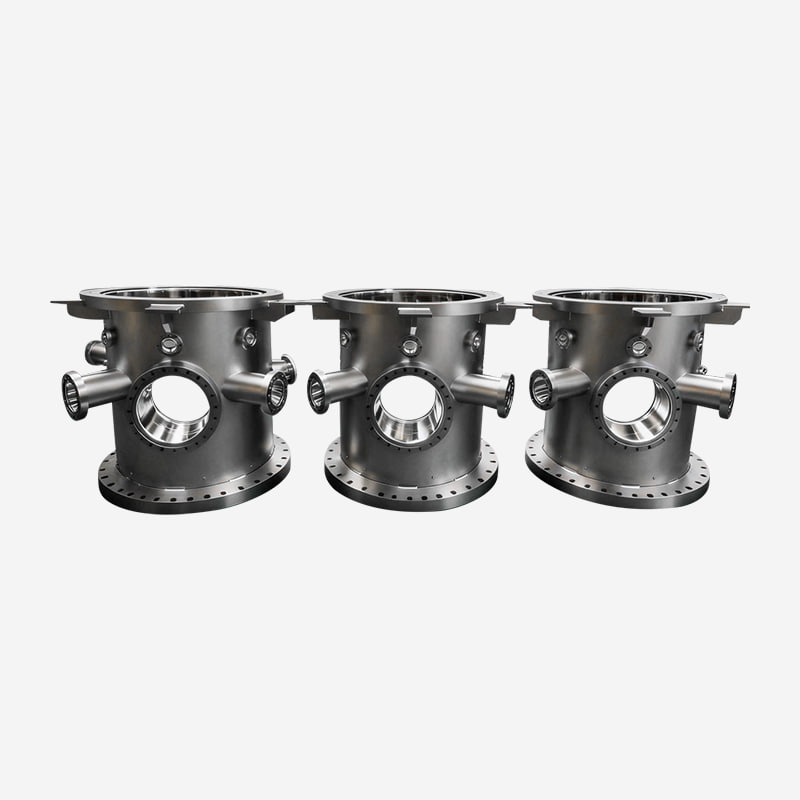
Meeting HV and UHV standards, these chambers are rigorously helium leak-tested to ensure ultra-low l...
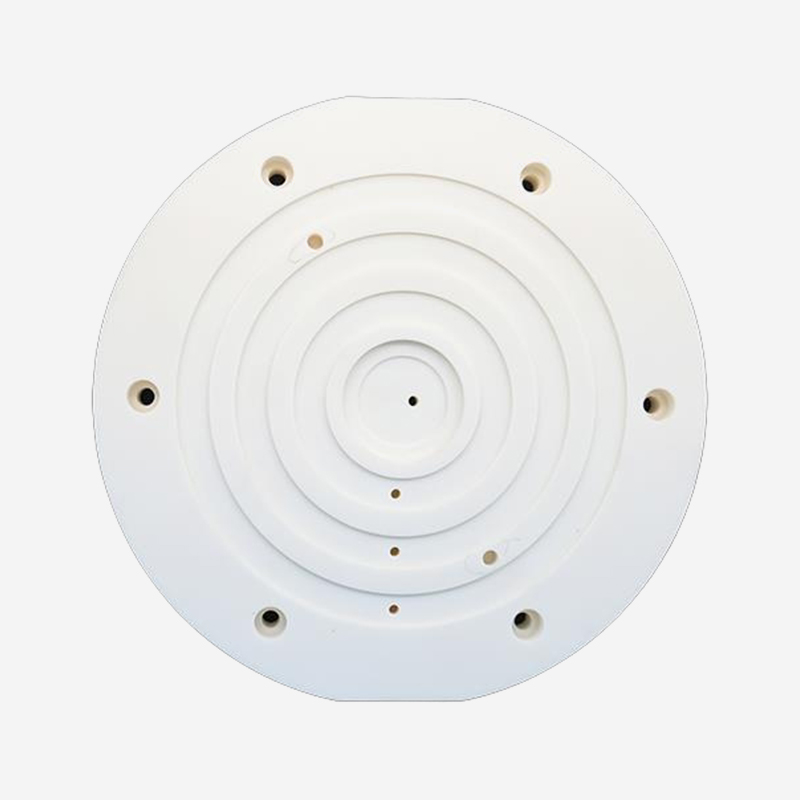
Product Features High cleanliness: Smooth surface, dust-free, suitable for precision workpieces such...
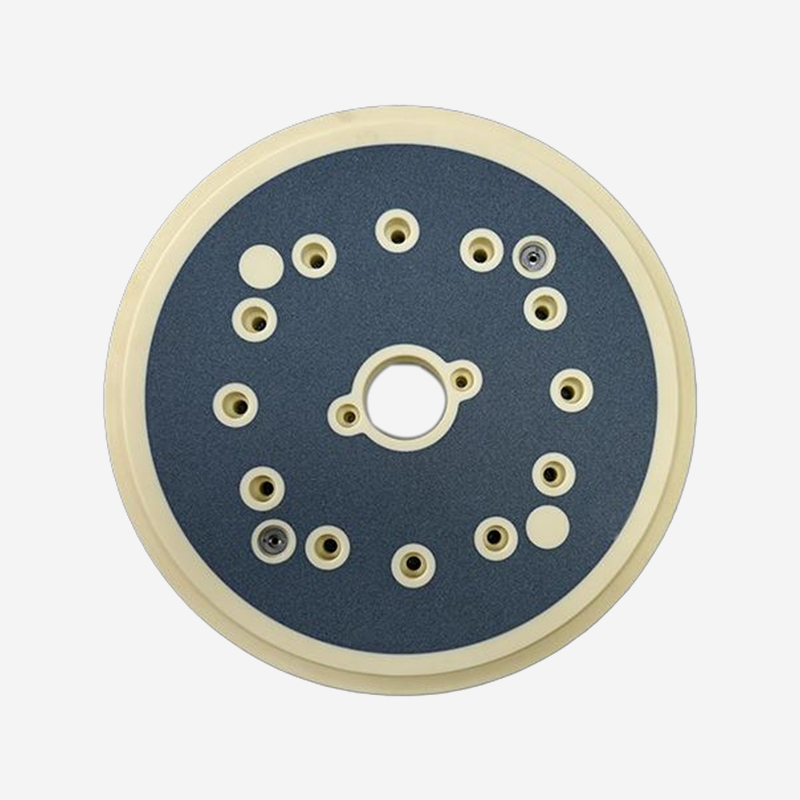
Product Features High cleanliness: High purity, no static electricity, suitable for high-cleanliness...
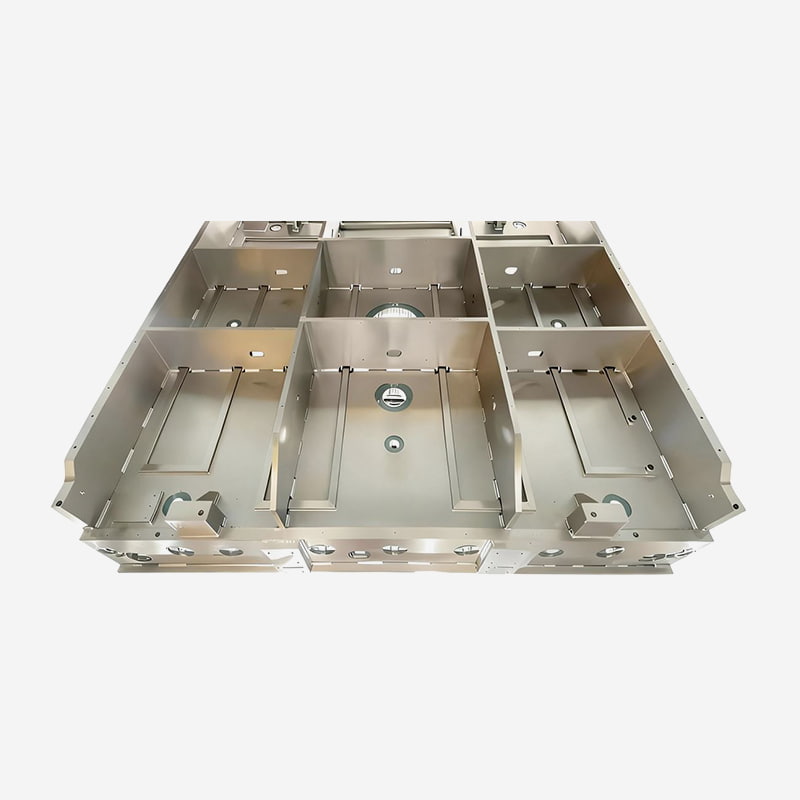
Engineered for ALD, CVD, and PVD processes, these chambers feature superior sealing integrity and op...
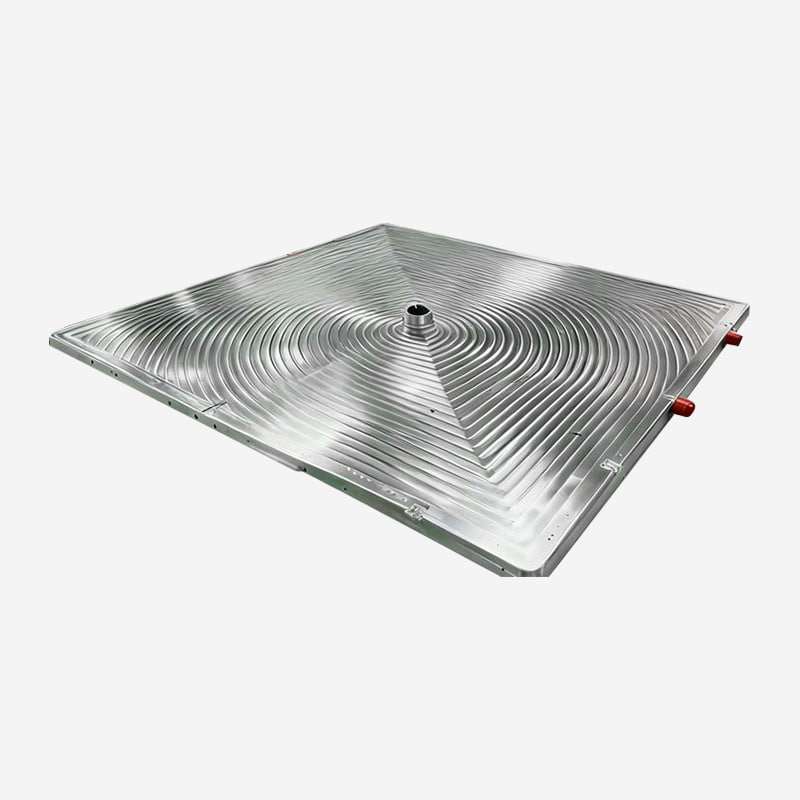
Precision-machined from high-strength aluminum alloys, these chambers offer a lightweight structure ...
Ready to Innovate Together? Contact Our Experts.

Contact Us
Address: 288 Shande Road, Shanyang Town, Jinshan District, Shanghai, China TEL/WhatsApp:Mobile terminal




 English
 日本語
日本語
 عربى
عربى
 中文简体
中文简体