How do precision motion stages achieve nanometer-level positioning accuracy?
Precision motion stages achieve nanometer-level positioning accuracy through the integration of high-resolution feedback systems, advanced mechanical design, and sophisticated control algorithms that compensate for thermal drift, vibration, and mechanical non‑linearities. These stages are essential for semiconductor manufacturing, precision metrology, and advanced research applications where positioning errors of even a few nanometres can compromise product quality or experimental results. SUNFUN Group has been manufacturing precision components since 1986, applying 0.001‑mm machining capabilities to produce motion stage components that meet the demanding requirements of nanometer‑level positioning systems.
Product Category 1: Precision Linear Motion Stages
Definition and Positioning
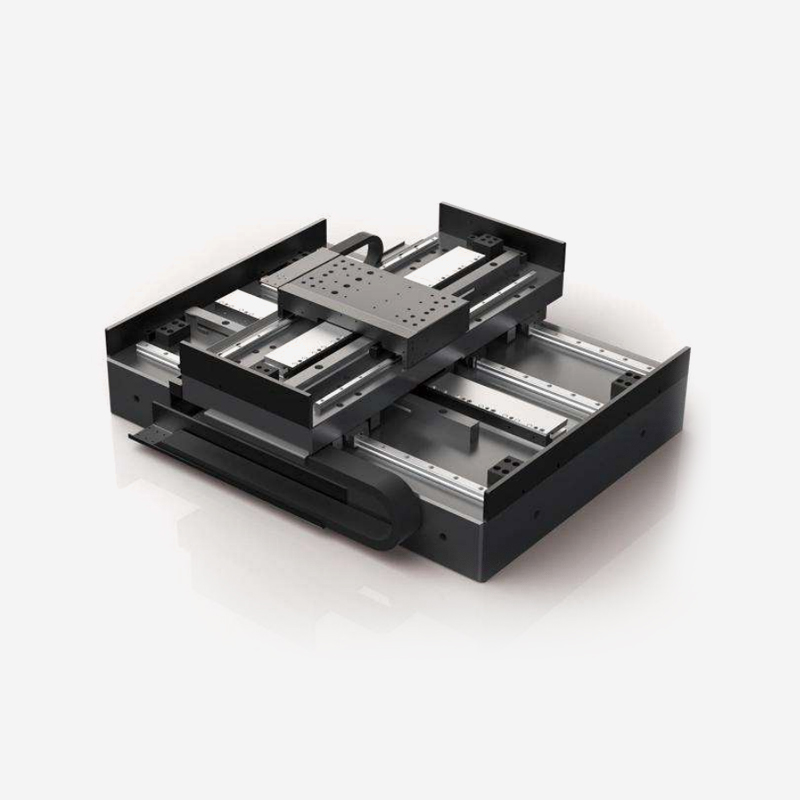
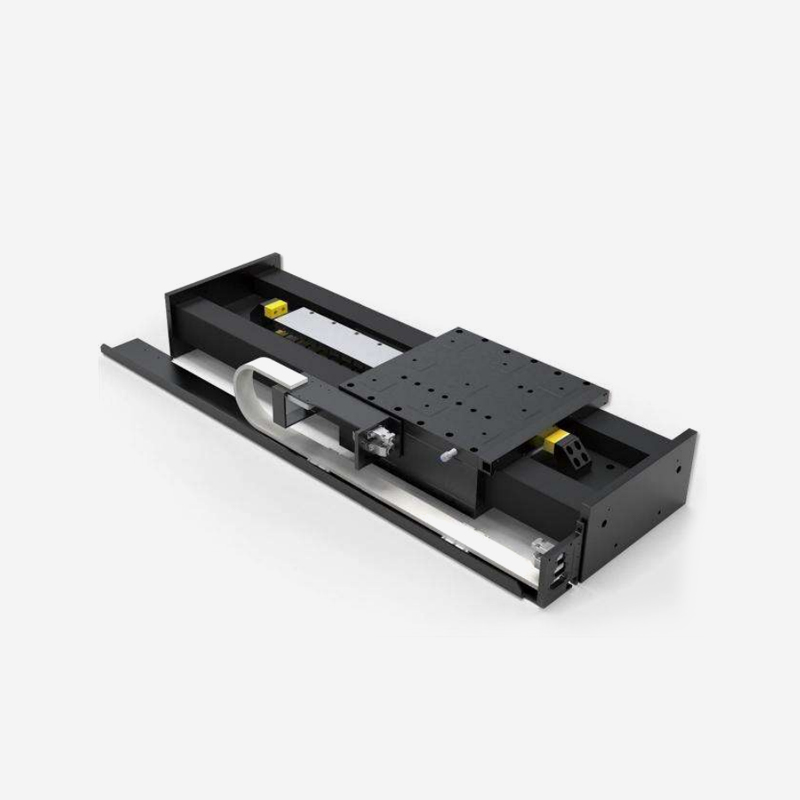
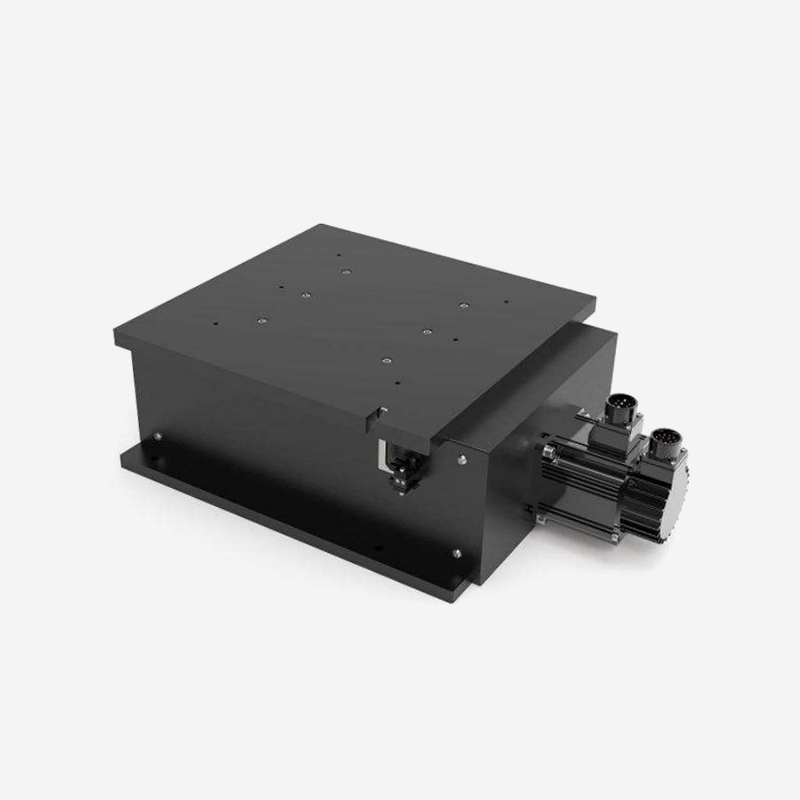
Precision linear motion stages provide controlled movement along a single axis with nanometer‑level resolution and repeatability. These stages incorporate precision guideways, high‑resolution encoders, and advanced servo control systems to achieve positioning accuracy measured in nanometres. SUNFUN Group manufactures linear stage components—including guide rails, bearing blocks, and precision mounting surfaces—that are machined to micron and sub‑micron tolerances. As precision motion stages components, these parts must meet the exacting dimensional requirements of nanometer‑level positioning systems.
Core Functions and Technical Features
Precision linear motion stages function through the interaction of several critical systems. The guideway system—typically cross‑roller or air‑bearing—provides friction‑free motion with minimal geometric error. The drive system—linear motors or leadscrews with anti‑backlash features—converts electrical energy to mechanical motion. The feedback system—typically glass scale or laser interferometer encoders with resolutions below 1 nm—provides position data for closed‑loop control. The control system applies algorithms that compensate for dynamic and static errors, achieving the required positioning accuracy.
Thermal management is critical for nanometer‑level positioning. Materials are selected for thermal stability, and temperature control systems maintain stable operating conditions. SUNFUN Group's precision components are manufactured from thermally stable materials with controlled expansion coefficients, ensuring dimensional stability across operating temperature ranges. Our 0.001‑mm precision machining—applied to guide rails and bearing surfaces—provides the geometric accuracy required for consistent motion and positioning. These precision components are essential for achieving nanometer‑level accuracy in linear motion systems.
Typical Application Scenarios
Precision linear motion stages are used in applications requiring extremely accurate positioning. Semiconductor wafer inspection and metrology tools use linear stages for sample positioning. Precision alignment systems in optical and photonics manufacturing use linear stages for component positioning. Research applications—including scanning probe microscopy and X‑ray diffraction—rely on linear stages for sample manipulation and measurement.
Differentiation from Other Motion Stages
Precision linear stages are distinguished from standard motion stages by their accuracy, resolution, and repeatability specifications. Standard stages may achieve 0.01 mm accuracy, while precision stages achieve accuracy measured in nanometres. The difference is achieved through tighter manufacturing tolerances, higher resolution feedback, and more sophisticated control.
SUNFUN Group's Manufacturing Capabilities
SUNFUN Group's precision linear stage component production applies precision machining and quality control appropriate for nanometer‑level positioning applications. Our 0.001‑mm precision machining ensures that guide rails and bearing surfaces meet dimensional requirements for consistent motion and positioning. Through our open innovation ecosystem, established in partnership with governments, enterprises, universities, and institutions, we maintain knowledge of evolving motion stage requirements for precision motion stages components.
Linear Stage Specifications
- Positioning accuracy: Sub‑micron to nanometre
- Resolution: 0.1 – 1 nm (encoder dependent)
- Travel range: 10 mm to 1,000+ mm
- Guide type: Cross‑roller, air‑bearing
- Drive type: Linear motor, leadscrew
- Feedback: Glass scale, laser interferometer
Product Category 2: Precision Rotary Motion Stages
Definition and Positioning
Precision rotary motion stages provide controlled rotational movement with arc‑second and sub‑arc‑second accuracy, enabling precise angular positioning of components and workpieces. These stages incorporate precision bearings, high‑resolution rotary encoders, and advanced control systems to achieve positioning accuracy measured in arc‑seconds (1 arc‑second equals approximately 5 nanometres of linear displacement at 1 metre radius). SUNFUN Group manufactures rotary stage components—including bearing housings, mounting plates, and encoder mounting surfaces—that are machined to the tolerances required for precise angular positioning. These precision components are essential for accurate rotational positioning.
Core Functions and Technical Features
Precision rotary motion stages function through the interaction of bearing systems, drive systems, and feedback systems. Air‑bearings or precision mechanical bearings provide low‑friction rotation with minimal radial and axial runout. Direct drive motors or harmonic drives with anti‑backlash features provide smooth, precise torque. High‑resolution rotary encoders—typically optical or magnetic with resolutions of 0.1 arc‑second or better—provide position feedback for closed‑loop control.
The stage design must address radial and axial error motions that affect positioning accuracy. Stage components are machined to tight concentricity and flatness tolerances to minimize these errors. SUNFUN Group's rotary stage components are manufactured with precision that supports accurate rotational positioning. Our 0.001‑mm precision machining ensures that bearing housings and mounting surfaces meet dimensional requirements for minimal error motion. These precision motion stages components are essential for achieving arc‑second accuracy in rotary positioning.
Typical Application Scenarios
Precision rotary motion stages are used wherever angular positioning is critical. Semiconductor wafer handling systems use rotary stages for wafer orientation and positioning. Optical systems use rotary stages for mirror and lens positioning. Metrology systems use rotary stages for angular measurements and component inspection. Research applications—including crystallography and materials science—use rotary stages for sample manipulation.
Differentiation from Linear Stages
Rotary stages are distinguished from linear stages by their motion type—rotation versus translation—and their error characteristics. Rotary stage errors include radial runout, axial runout, and angular errors, while linear stage errors include straightness, flatness, and angular errors. Both types require precision manufacturing to achieve their respective accuracy specifications.
SUNFUN Group's Manufacturing Capabilities
SUNFUN Group's precision rotary stage component production applies precision machining and quality control appropriate for angular positioning applications. Our in‑house institute and talent academy provide technical expertise in rotary stage design and component manufacturing. Our accredited technology enterprise status—demonstrated through national‑level R&D tasks and projects commissioned by the NDRC, MOST, and MIIT—supports quality systems for precision components.
Rotary Stage Specifications
- Positioning accuracy: Sub‑arc‑second
- Resolution: 0.01 – 0.1 arc‑second
- Diameter: 50 mm to 500+ mm
- Load capacity: 5 kg to 500+ kg
- Bearing type: Air‑bearing, precision mechanical
- Drive type: Direct drive, harmonic drive
Product Category 3: Multi‑Axis Motion Systems
Definition and Positioning
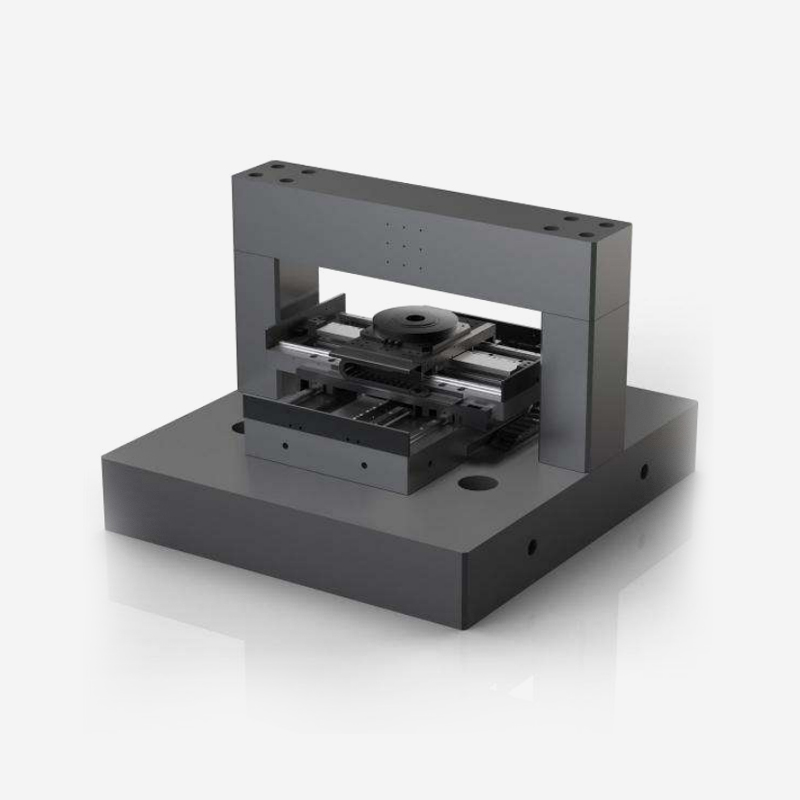
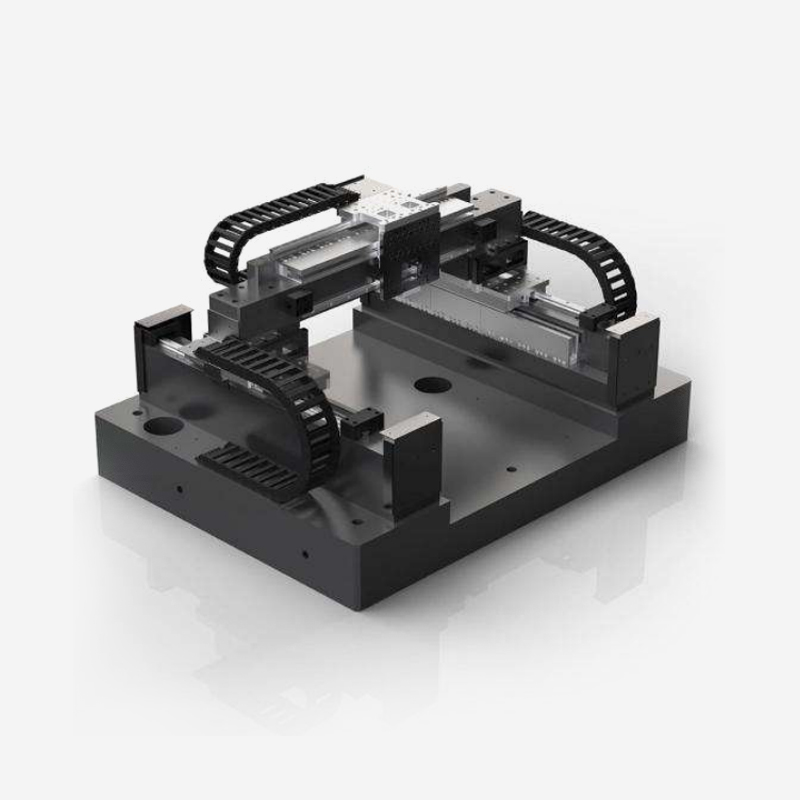
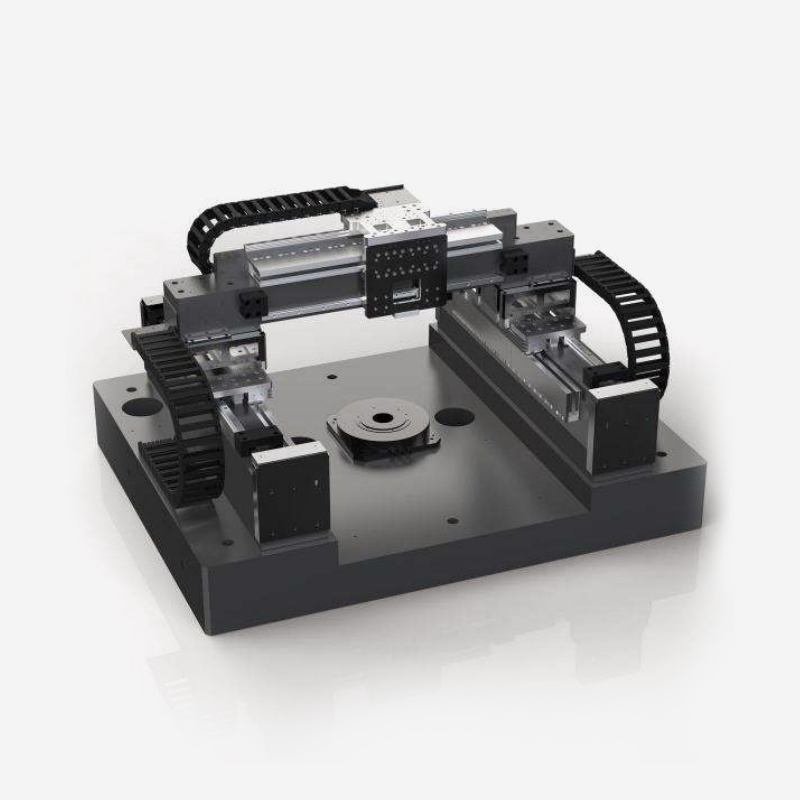
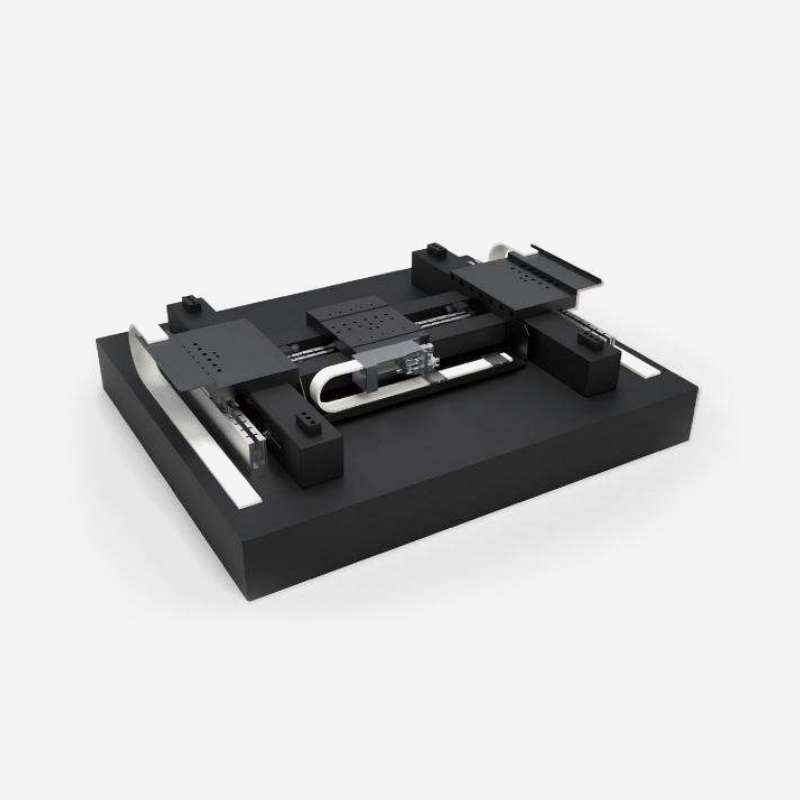
Multi‑axis motion systems combine linear and rotary stages to provide positioning in multiple degrees of freedom, enabling complex positioning tasks in semiconductor manufacturing, precision assembly, and research applications. These systems integrate multiple precision axes with coordinated control to achieve nanometer‑level positioning in three or more axes. SUNFUN Group manufactures components for multi‑axis systems, applying precision machining to produce parts that support accurate positioning across multiple degrees of freedom. These precision motion stages components enable complex positioning tasks.
Core Functions and Technical Features
Multi‑axis motion systems function through the coordinated control of multiple axes, each contributing to the overall positioning accuracy. The system must manage thermal expansion, vibration, and error propagation from each axis. The control system applies kinematic compensation to correct for errors arising from any axis. The system design must accommodate the interaction between axes without introducing additional errors.
The error budget for multi‑axis systems must consider errors from each axis and their interaction. SUNFUN Group's components are manufactured with the precision required for error budgets of nanometres across multiple axes. Our 0.001‑mm precision machining ensures that each component meets dimensional requirements for the overall system accuracy. These precision motion stages components support nanometer‑level positioning in complex systems.
Typical Application Scenarios
Multi‑axis motion systems are used in applications requiring complex positioning. Semiconductor lithography and inspection tools use multi‑axis systems for wafer and reticle positioning. Precision assembly systems use multi‑axis positioning for component placement. Metrology systems use multi‑axis systems for dimensional measurement.
Differentiation from Single‑Axis Systems
Multi‑axis systems are distinguished from single‑axis systems by their complexity, error budgets, and control requirements. Single‑axis systems require precision in one direction, while multi‑axis systems require precision in multiple directions with coordinated control.
SUNFUN Group's Manufacturing Capabilities
SUNFUN Group manufactures components for multi‑axis systems with the precision required for complex positioning applications. Through our open innovation ecosystem, we maintain knowledge of evolving motion system requirements for precision components.
Key Specifications Comparison
| Parameter |
Linear Stage |
Rotary Stage |
Multi‑Axis System |
| Motion type |
Translation |
Rotation |
Multiple degrees of freedom |
| Positioning accuracy |
Sub‑micron to nanometre |
Sub‑arc‑second |
Nanometre (combined) |
| Feedback method |
Linear encoder |
Rotary encoder |
Multiple encoders |
| Typical resolution |
0.1 – 1 nm |
0.01 – 0.1 arc‑second |
Combined resolution |
| Control complexity |
Single axis |
Single axis |
Multi‑axis coordinated |
Precision motion stages achieve nanometer‑level positioning accuracy through the integration of high‑resolution feedback systems, precision mechanical design, advanced control algorithms, and components manufactured to tight tolerances. SUNFUN Group manufactures components for all types of precision motion stages—linear, rotary, and multi‑axis—applying precision machining and quality control developed over four decades of experience. Our 0.001‑mm precision machining ensures that motion stage components meet dimensional requirements for nanometer‑level positioning accuracy. Through our in‑house institute, talent academy, and open innovation ecosystem—established in partnership with governments, enterprises, universities, and institutions—SUNFUN Group maintains the technical expertise required for precision components that support the most demanding positioning applications.
Frequently Asked Questions
Q1: What is the difference between accuracy and resolution in precision motion stages?
Resolution is the smallest position change the stage can detect or command, while accuracy is how close the achieved position is to the commanded position. A stage may have 0.1 nm resolution but only 10 nm accuracy due to errors such as thermal drift or mechanical non‑linearities. Precision motion stages components must support both high resolution and high accuracy for nanometer‑level positioning.
Q2: How does temperature affect nanometer‑level positioning accuracy?
Temperature changes cause thermal expansion of stage components, which can cause positioning errors. A 1 °C temperature change can cause 10‑20 µm expansion in a 1 metre stage—far exceeding nanometer accuracy requirements. Precision components must be manufactured from thermally stable materials and operated in temperature‑controlled environments for nanometer‑level positioning.
Q3: What feedback methods are used for nanometer‑level positioning?
Glass scale encoders with resolutions below 1 nm and laser interferometer systems are commonly used for nanometer‑level positioning feedback. The feedback system resolution must exceed the required positioning accuracy for effective control. Precision motion stages components must support the mounting and alignment requirements of these high‑resolution feedback systems.
Q4: What quality controls apply to SUNFUN Group's precision motion stage component manufacturing?
SUNFUN Group applies material certification, dimensional verification, surface finish measurement, and geometric tolerance inspection to all precision component production. Our accredited technology enterprise status supports comprehensive quality systems for precision components, ensuring consistent component quality and reliable positioning performance.


 English
 日本語
日本語
 عربى
عربى
 中文简体
中文简体