

 English
 日本語
日本語
 عربى
عربى
 中文简体
中文简体


Cover Plate Glass Processing and Polishing Materials
Application field: Cover glass The processing of cover glass for electronic products such as touch s...

Content
Picture a vacuum line that needs to be reconfigured between process runs. The pump is swapped, a pressure gauge is added, a filter element is replaced. With a bolted flange, each change means loosening a ring of hex nuts, replacing a gasket, and re-torquing everything before the next leak check. KF fittings remove that friction. They are the quick-release standard for vacuum plumbing, and a correctly assembled KF joint opens and re-seals in seconds without sacrificing leak integrity.
The short answer for system builders: if your process runs from rough vacuum to about 10-7 mbar, ISO-KF fittings are usually the most practical connection family you can choose. They are compact, affordable, and available in a wider range of flanges, clamps, adapters, and valves than any other vacuum connection type. The trade-off is that KF fittings are not designed for ultra-high vacuum or high positive pressure, which matters only for certain processes.
KF comes from Klein Flansche, the German term for "small flange." The same family is called ISO-KF in international standards and NW (Nennweite, or nominal width) in older drawings. ISO 2861 defines the dimensions that keep components from different manufacturers interchangeable.
A KF connection uses three parts: two flanges facing each other, a centering ring that carries an O-ring, and a clamp that pulls the flanges together. The centering ring is the clever part. It aligns the two tubes and, as the clamp tightens, compresses the O-ring radially so that the seal becomes tighter without requiring a torque wrench.
KF components are found in roughing lines, forelines, gas delivery lines, pump inlet connections, and small chamber ports. Because the clamp allows a small degree of angular misalignment, KF fittings tolerate the slight pipe eccentricities that occur in real installations. That is why they dominate laboratory and process vacuum systems up to DN50, and remain common on larger lines when quick access is needed.
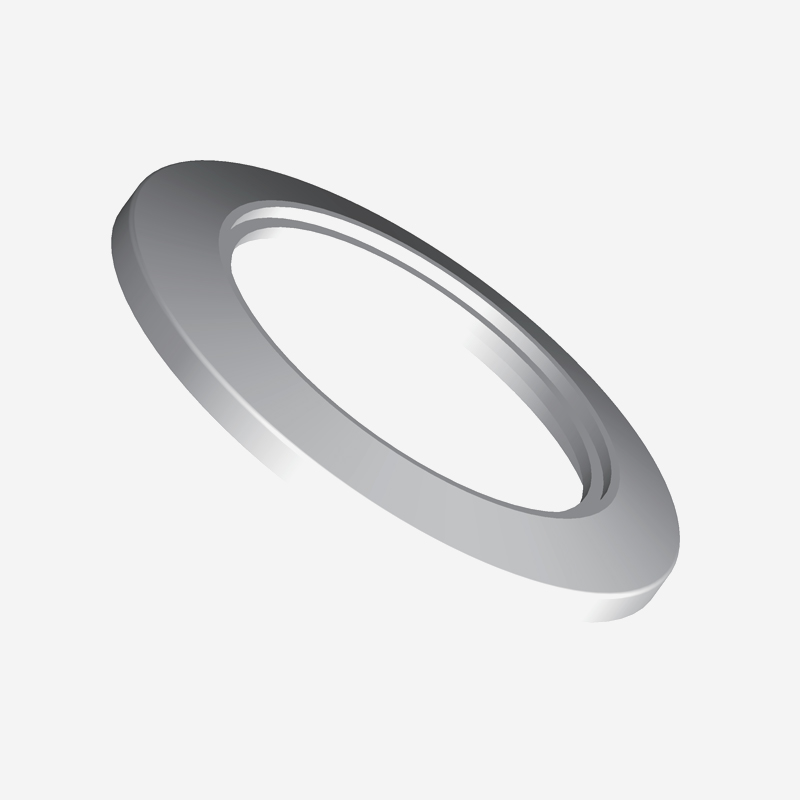 KF Flange for Vacuum Tube ConnectionsChoose from SUS304 weld-neck or rotatable KF flanges sized from KF10 to KF160, ideal for permanent or alignment-sensitive tube joints in vacuum systems.View Product →
Start a new system design by fixing the flange type. A weld-neck flange is the best choice for permanent tube connections; a rotatable flange helps when the tube end cannot be rotated during assembly.
Every KF fitting carries a DN value that refers to the nominal bore in millimetres, not the outside diameter of the flange. Mixing up these two numbers is the most common sizing mistake in vacuum component purchasing.
| DN Size | Nominal Bore (mm) | Flange OD (mm) | Clamp Type |
|---|---|---|---|
| DN10 | 10 | 30 | Quick-release |
| DN16 | 16 | 30 | Quick-release |
| DN25 | 25 | 40 | Quick-release |
| DN40 | 40 | 55 | Quick-release |
| DN50 | 50 | 75 | Quick-release |
| DN63 to DN200 | 63 to 200 | Standardised per size | Chain-style clamp |
Why do DN10 and DN16 share the same 30 mm flange outer diameter? Because they are designed to fit the same clamp, which reduces the tooling a service technician has to carry. In terms of performance, the bore rather than the flange sets the conductance, and therefore the effective pumping speed, of that line section. If a turbomolecular pump has a high throughput, moving from DN25 to DN40 often removes a measurable conductance bottleneck.
Above DN63, the industry moves from a spring-loaded quick clamp to a chain clamp that wraps around the flange periphery. The sealing principle stays the same, but the clamping force is distributed over a longer circumference. SUNFUN offers chain clamps covering KF16 through KF200, so large lines can keep the same quick-access maintenance advantage.
The flange and the O-ring perform different jobs, and both deserve attention during specification. Flange material determines mechanical strength, corrosion resistance, and outgassing behaviour. O-ring material determines the achievable base pressure and the allowable bake-out temperature.
| Material | Operating Range | Best Use |
|---|---|---|
| NBR | -30 to +100°C | General sealing, low cost, moderate vacuum |
| FKM (Viton) | -20 to +150°C | High-vacuum service, bakeout to 150°C |
| PTFE | -200 to +250°C | Aggressive chemicals; needs special design |
| FFKM | -20 to +275°C | Harsh semiconductor strip and etch processes |
For a general-purpose high-vacuum system, FKM is the safe default. NBR is cheaper, but its higher gas permeability and lower temperature ceiling make it a poor choice below 10-4 mbar. If the system must be baked above 150°C, choose a perfluoroelastomer or switch to a metal-sealed connection.
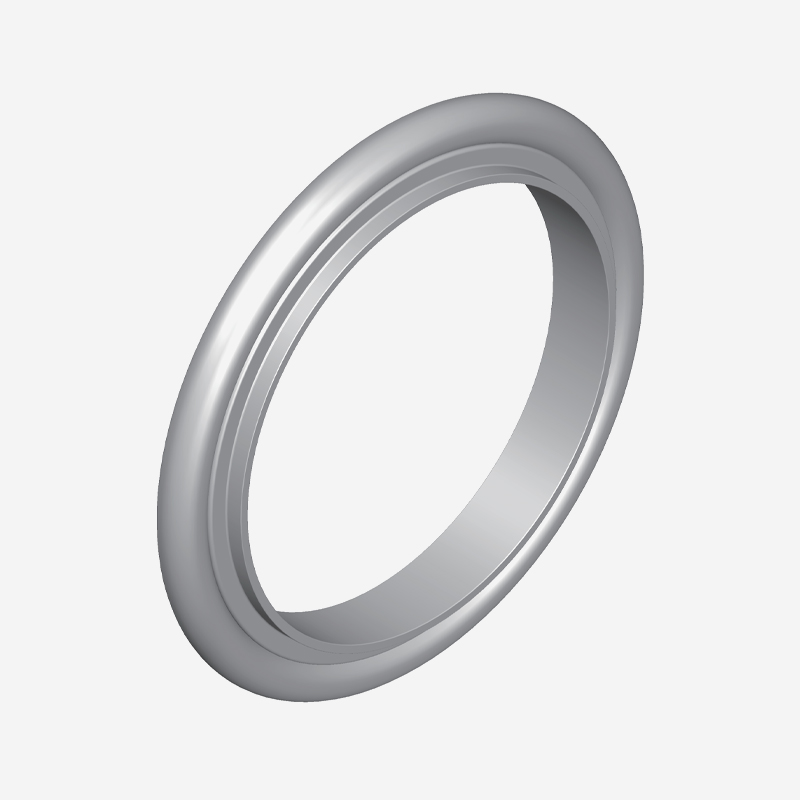 KF Centering Ring with Viton or NBR O-RingCentering rings with FKM or NBR O-rings ensure reliable sealing in KF connections; Viton suits high vacuum and higher temperatures, while NBR offers economy.View Product →
KF is not the only vacuum connection standard, and it is not the right choice for every job. The decision usually comes down to the base pressure the process needs and how often the joint must be opened.
| Standard | Seal Mechanism | Pressure Range | Bakeout | Assembly |
|---|---|---|---|---|
| KF (ISO-KF) | O-ring in centering ring | Atmosphere to 10-7 mbar | 150°C with FKM | Clamp, seconds |
| ISO-K / ISO-F | O-ring on flat face | Atmosphere to 10-7 mbar | 150°C with FKM | Bolted clamp, minutes |
| CF (ConFlat) | Copper gasket with knife edge | Atmosphere to below 10-11 mbar | 450°C | Bolted, minutes |
| JIS VG / VF | O-ring on flat face | Atmosphere to 10-7 mbar | 150°C with FKM | Bolted, minutes |
The pattern is consistent across the table: elastomer-sealed flanges serve rough and high vacuum, while metal-sealed CF flanges exist for UHV and aggressive bakeout. If the process needs a base pressure below 10-8 mbar, or repeated 300°C bakeouts, CF is the honest answer. If the process stays above 10-7 mbar and the team values maintenance speed, KF is usually the better engineering and economic choice.
Most field problems come from specification errors rather than from the fittings themselves. Run through this checklist before ordering, and the most common causes of vacuum leaks and rework disappear.
When procurement pressure pushes the team toward the cheapest quote, remember that a KF joint is only as reliable as the O-ring groove depth and surface finish. A superficially identical flange from an unknown source may pass one leak test and fail after thermal cycling. Choosing a manufacturer that machines vacuum components to consistent tolerances matters more than the per-piece price difference.
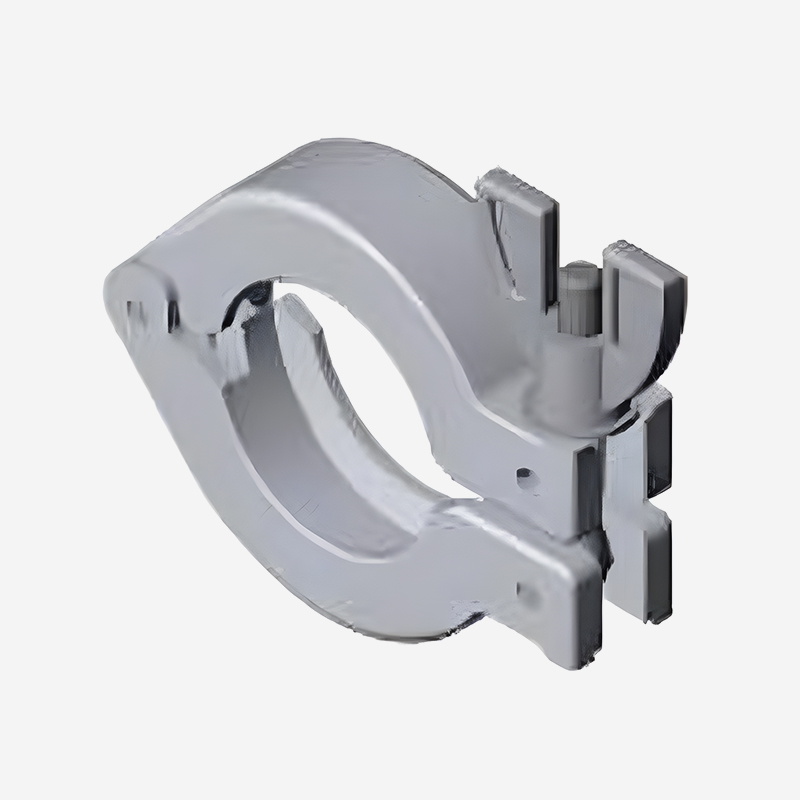 Aluminum KF Clamp with Nickel-Plated OptionRobust clamps for KF flanges in sizes KF16 to KF50, available in plain aluminum or nickel-plated finish, providing secure fastening and consistent joint performance.View Product →
DN stands for diameter nominal and refers to the nominal bore of the tube, not the outside diameter of the flange. For example, a DN16 KF flange has a 16 mm nominal bore but shares a 30 mm flange outer diameter with DN10. When in doubt, measure the bore with a calliper.
Standard KF fittings with FKM O-rings are rated down to about 10-7 mbar, which is high vacuum rather than UHV. With careful machining, surface finish, and sealing, some assemblies reach lower pressures, but for operation below 10-9 mbar or bakeout above 200°C, CF flanges with copper gaskets are the reliable route.
Snug is enough. A quick-release clamp is designed so that the closed clamp position defines the O-ring compression; additional force does not create a better vacuum, it only risks deforming the flange, especially with aluminium parts. Hand-tighten the wing nut until the clamp seats fully, then confirm with a leak check.
In most cases yes, because ISO 2861 standardises the critical dimensions such as flange outer diameter, clamp gap, and centering ring profile. Tolerances still apply, and a low-quality flange with an uneven groove depth can leak even with a good clamp. For critical systems, keep flanges, clamps, and centering rings from one manufacturer as a matched set.
KF fittings are the workhorse of vacuum system construction. The right specification comes down to three decisions: size, sealing material, and the connection standard your vacuum level truly requires. For most rough-to-high vacuum systems, a matched set of stainless steel flanges, FKM centering rings, and correctly sized clamps will serve reliably for years.
SUNFUN Group has manufactured vacuum components and precision parts since 1986, and its KF range includes flanges, clamps, centering rings, adapters, bellows, and valves from DN10 to DN200. If a new vacuum line is on the drawing board, or an existing line leaks after every thermal cycle, the company background and capability pages summarise the manufacturing experience behind these components. The complete vacuum piping family is listed on the SUNFUN website, organised by standard so that sizing and ordering remain straightforward.
Application field: Cover glass The processing of cover glass for electronic products such as touch s...
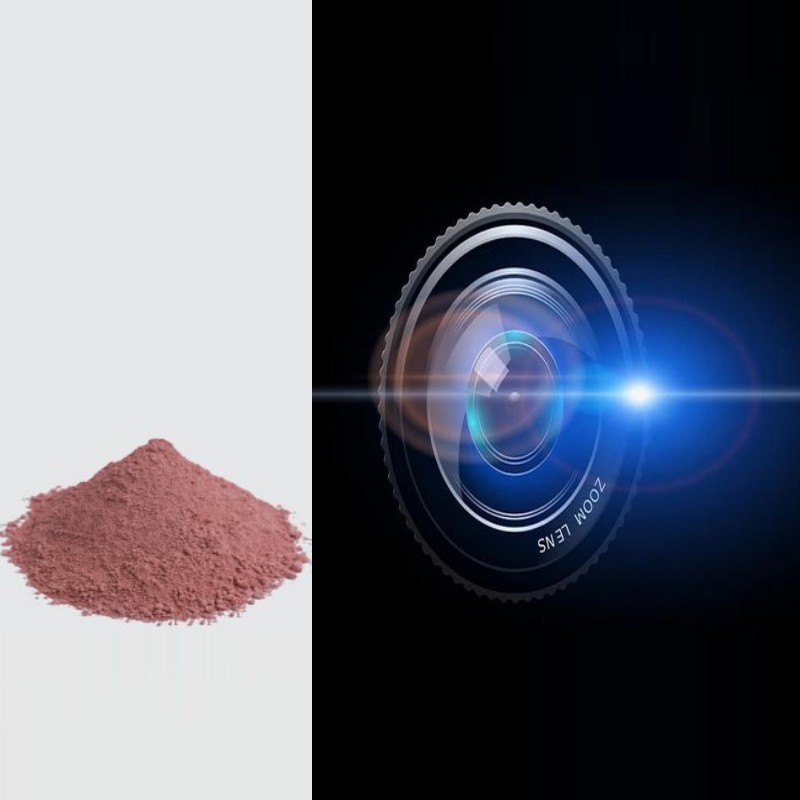
Application fields Classical chemical polishing process, suitable for polishing optical spherical gl...
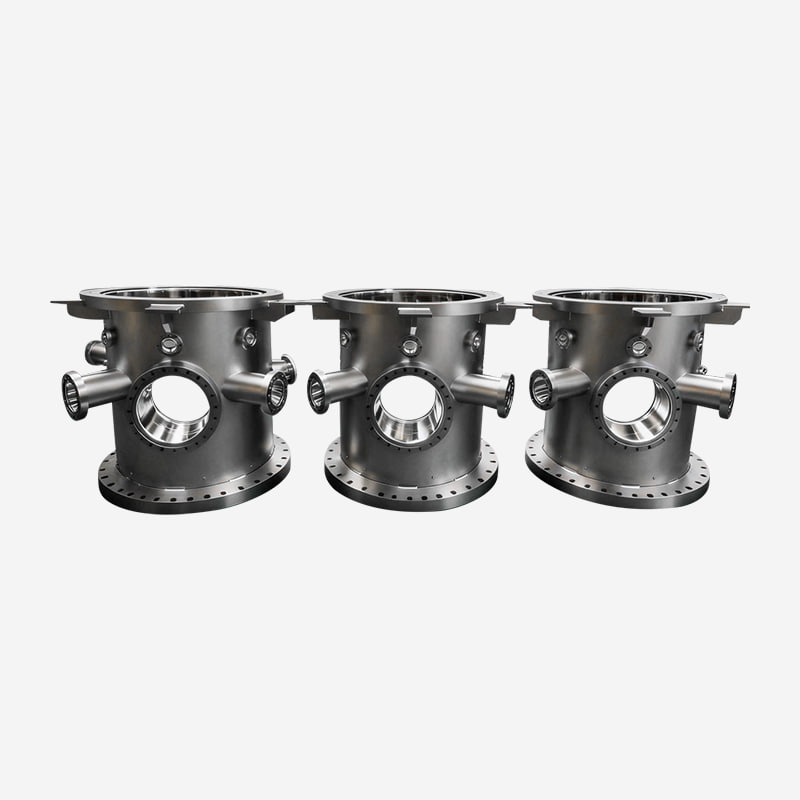
Meeting HV and UHV standards, these chambers are rigorously helium leak-tested to ensure ultra-low l...
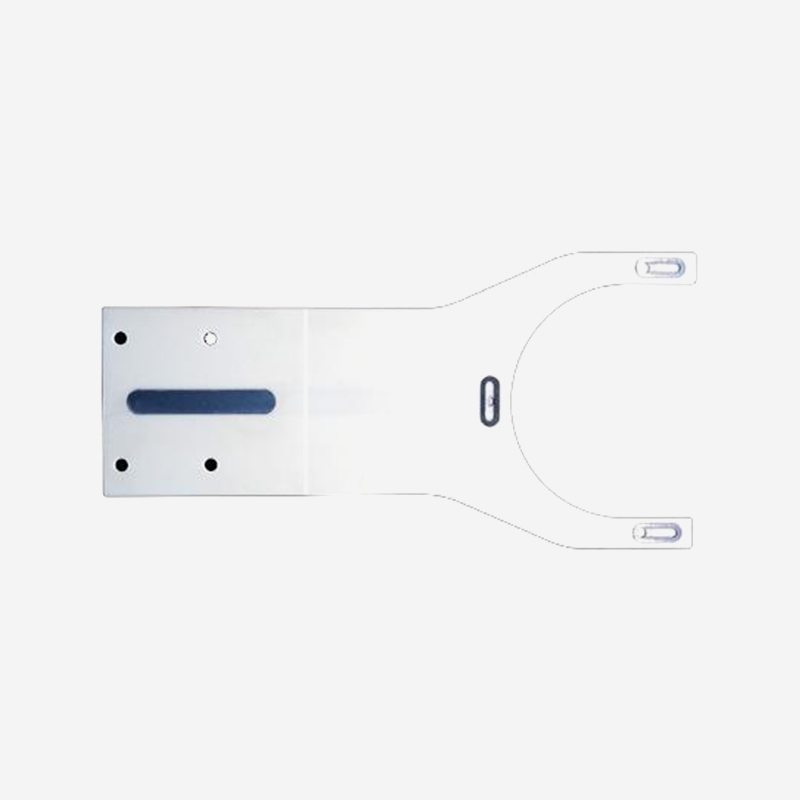
Product Features Clean and low contamination: Stable material, dense surface, less prone to dust and...
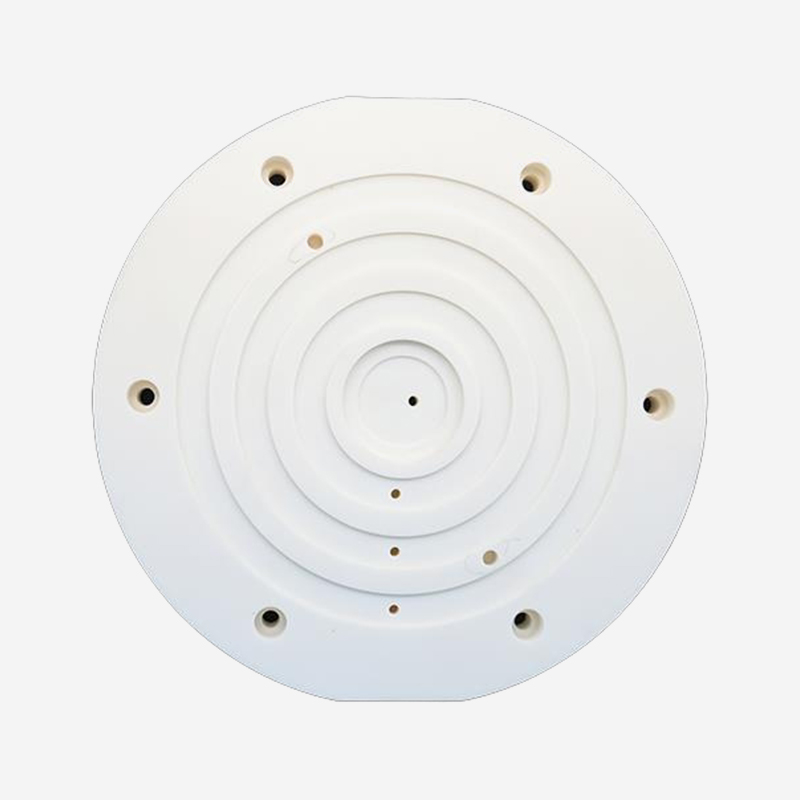
Product Features High cleanliness: Smooth surface, dust-free, suitable for precision workpieces such...
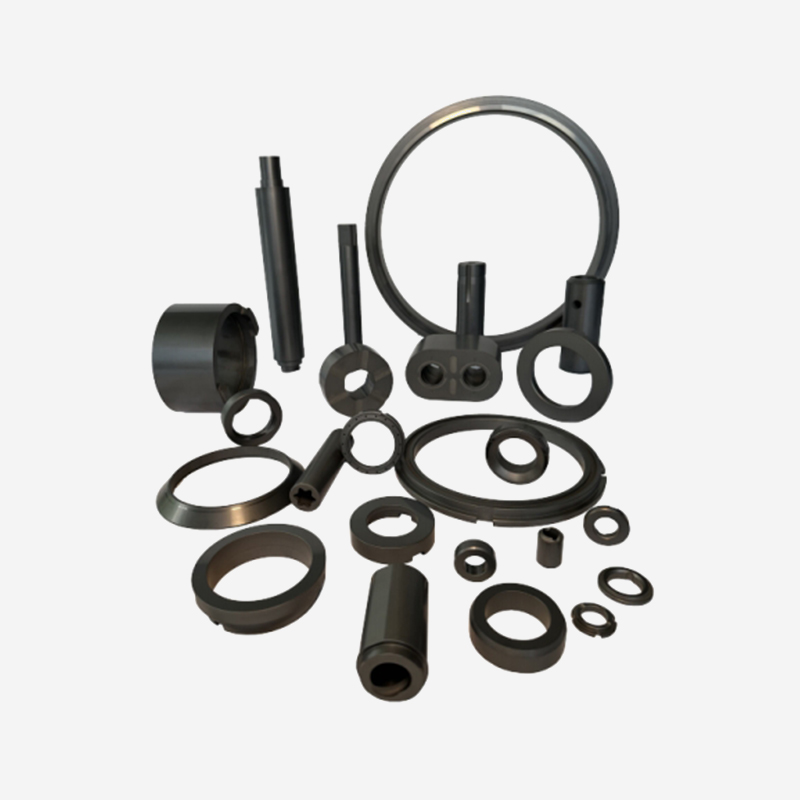
Silicon carbide materials have extremely high hardness and strength, excellent wear resistance and a...
Ready to Innovate Together? Contact Our Experts.

Contact Us
Address: 288 Shande Road, Shanyang Town, Jinshan District, Shanghai, China TEL/WhatsApp:Mobile terminal