How do you ensure leak‑tight connections when using vacuum flange adapters?
Ensuring leak‑tight connections with vacuum flange adapters requires attention to flange face condition, seal selection, proper alignment, and appropriate clamping torque. Adapters serve as transition components between different vacuum flange standards—connecting KF to ISO, ISO to CF, or JIS to KF systems—and any leak at the adapter interface compromises the entire vacuum system's performance. SUNFUN Group has been manufacturing precision vacuum adapters since 1986, applying 0.001‑mm precision machining to produce components that support reliable, leak‑tight connections in semiconductor, research, and industrial vacuum applications.
Product Category 1: KF to ISO Flange Adapters
Definition and Positioning
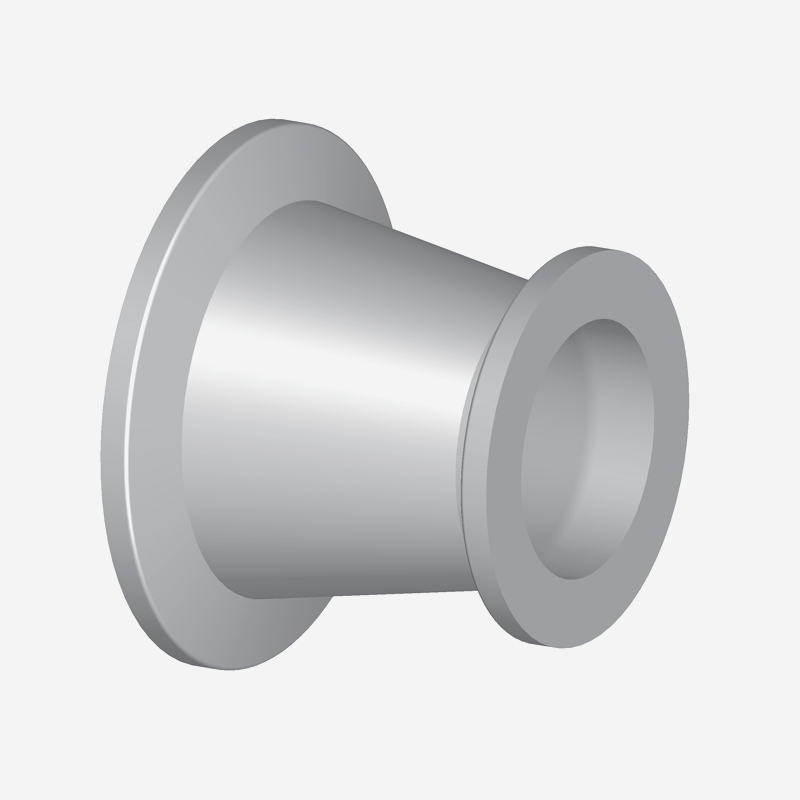
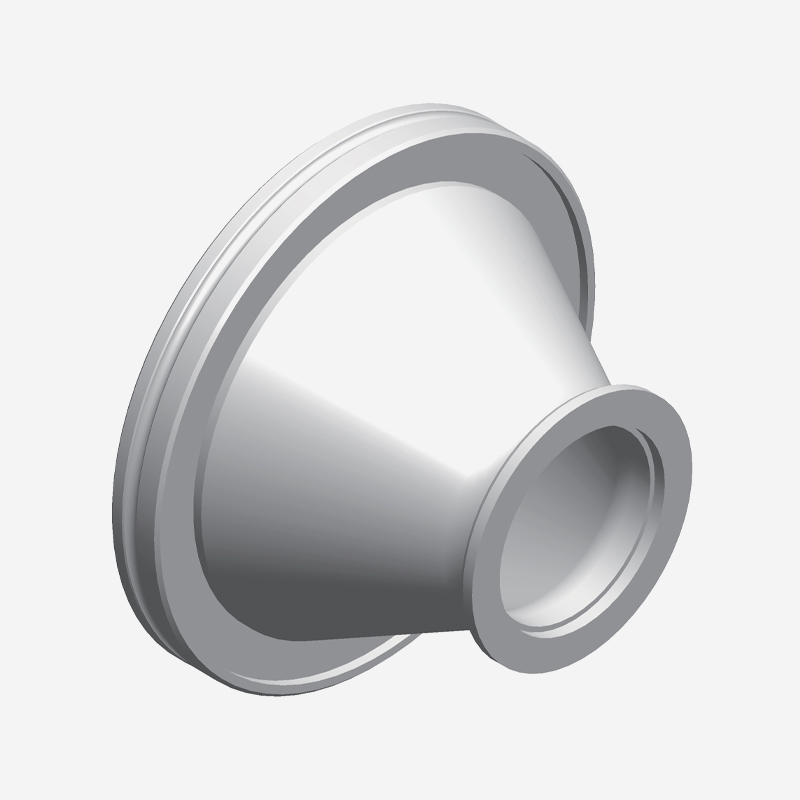
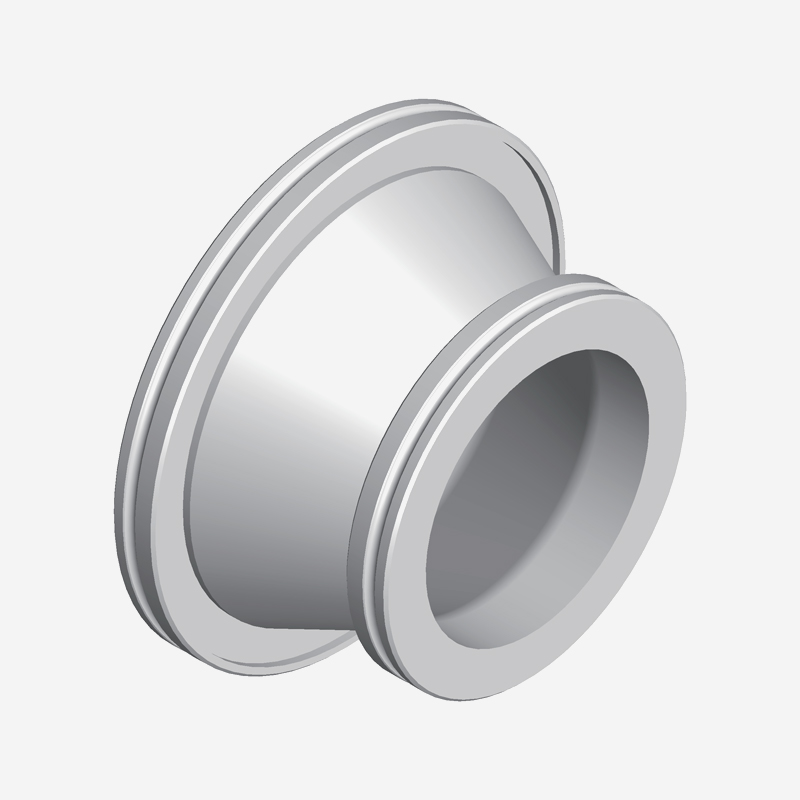
KF to ISO flange adapters enable the connection of KF flanged components to ISO flanged systems. These adapters feature a KF flange face on one end—complete with centering ring groove and O‑ring seal configuration—and an ISO flange face on the other. SUNFUN Group manufactures these adapters from stainless steel with precision‑machined sealing surfaces, positioning them as essential components for system integration across different vacuum connection standards. As vacuum adapters, these components enable interconnection while maintaining vacuum integrity.
Core Functions and Technical Features
KF to ISO adapters function by providing the correct sealing interface for both standards. The KF side uses a centering ring and elastomer O‑ring seal, compressed by the KF clamp to create the seal. The ISO side uses the appropriate ISO sealing method—typically a centering ring with O‑ring for ISO‑K or a bolted clamp ring for ISO‑F. The adapter body maintains concentricity between the two flange faces, ensuring proper alignment during assembly.
Leak‑tight sealing with KF to ISO adapters requires proper seal selection and installation. The O‑ring material must be compatible with the application chemistry and temperature. The centering ring must be correctly positioned before clamp installation. The KF clamp must be tightened to the specified compression—hand‑tight with the wing nut—while the ISO connection requires appropriate clamping force. SUNFUN Group's adapters are manufactured with sealing face roughness below 1.6 µm Ra, providing the surface quality required for reliable elastomer sealing. These vacuum flange adapters support consistent leak‑tight performance across standard transitions.
Typical Application Scenarios
KF to ISO adapters are used when connecting KF flanged components—such as roughing lines, small chambers, or instrumentation—to ISO flanged equipment including larger chambers, transfer systems, or pumping systems. Research laboratories frequently use these adapters when combining equipment from different manufacturers who specified different flange standards. Semiconductor support systems may require KF to ISO adapters to connect smaller components to larger process tools.
Differentiation from Other Adapter Types
KF to ISO adapters are distinguished from other adapter types by the specific flange standards they connect. Unlike KF to CF adapters that transition to UHV components, KF to ISO adapters serve applications in the medium to high vacuum range where both standards are appropriate.
SUNFUN Group's Manufacturing Capabilities
SUNFUN Group's KF to ISO adapter production applies precision machining and quality control appropriate for vacuum components. Our fully intelligent process management maintains energy consumption within 0.1 % across manufacturing operations. Through our open innovation ecosystem, established in partnership with governments, enterprises, universities, and institutions, we maintain knowledge of vacuum connection requirements.
KF to ISO Adapter Specifications
- KF side: DN 10 to DN 50 with centering ring
- ISO side: DN 63 to DN 200 (ISO‑K or ISO‑F)
- Materials: 304/316L stainless steel
- Surface finish: Ra ≤ 1.6 µm sealing faces
- Sealing: O‑ring on both sides
- Applications: Medium to high vacuum systems
Product Category 2: ISO to CF Flange Adapters
Definition and Positioning
ISO to CF flange adapters enable the connection of ISO flanged components to ConFlat (CF) flanged systems, bridging the gap between high vacuum and ultra‑high vacuum (UHV) applications. These adapters feature an ISO flange face on one end and a CF flange face with knife‑edge sealing surface on the other. SUNFUN Group manufactures these adapters from stainless steel with precision‑machined surfaces appropriate for both sealing methods, positioning them as critical components for UHV system integration. These vacuum fitting adapters support transitions between different vacuum regimes.
Core Functions and Technical Features
ISO to CF adapters provide the sealing interface for both standards—elastomer O‑ring sealing on the ISO side and all‑metal sealing on the CF side. The adapter body is manufactured with the ISO flange face geometry and sealing surface finish appropriate for elastomer sealing, while the CF end includes a knife‑edge profile with surface finish appropriate for metal gasket sealing. The adapter maintains concentricity and alignment between the two flange faces.
Ensuring leak‑tight connections with ISO to CF adapters requires attention to both sealing systems. The ISO side requires correct O‑ring placement and appropriate clamp or bolt torque. The CF side requires proper metal gasket installation, bolt torque sequencing, and bakeout compatibility. SUNFUN Group's adapters are manufactured with the knife‑edge surface finishes below 0.8 µm Ra required for reliable metal sealing. Our 0.001‑mm precision machining ensures that both flange faces meet the dimensional requirements for consistent sealing performance. These vacuum flange adapters support reliable UHV connections.
Typical Application Scenarios
ISO to CF adapters are used when connecting ISO flanged systems to UHV equipment. Semiconductor research tools frequently require transitions between ISO flanged process equipment and CF flanged UHV pumping systems or analysis instruments. Surface science instruments may require ISO to CF adapters to connect existing ISO flanged components to UHV chambers.
Differentiation from Other Adapter Types
ISO to CF adapters are distinguished by their ability to bridge high vacuum and UHV systems. The transition requires careful attention to both sealing methods, as the ISO side uses elastomer sealing while the CF side uses metal gasket sealing.
SUNFUN Group's Manufacturing Capabilities
SUNFUN Group's ISO to CF adapter production applies precision machining and surface finishing appropriate for both flange standards. Our accredited technology enterprise status—demonstrated through national‑level R&D tasks and projects commissioned by the NDRC, MOST, and MIIT—supports quality systems for vacuum adapters.
ISO to CF Adapter Specifications
- ISO side: DN 63 to DN 200 (ISO‑K or ISO‑F)
- CF side: DN 35 to DN 200 (ConFlat)
- Materials: 316L stainless steel
- ISO surface finish: Ra ≤ 1.6 µm
- CF surface finish: Ra ≤ 0.8 µm knife‑edge
- Applications: High vacuum to UHV transition
Product Category 3: KF to CF Flange Adapters
Definition and Positioning
KF to CF flange adapters enable the connection of KF flanged components to ConFlat (CF) flanged systems, providing a direct transition from rough/medium vacuum applications to UHV systems. These adapters feature a KF flange face on one end and a CF flange face with knife‑edge sealing surface on the other. SUNFUN Group manufactures these adapters from stainless steel with precision‑machined surfaces appropriate for both sealing methods, positioning them as versatile components for vacuum system integration.
Core Functions and Technical Features
KF to CF adapters provide the sealing interface for both standards—elastomer O‑ring sealing with centering ring on the KF side and all‑metal sealing on the CF side. The adapter body is manufactured with the KF flange geometry and sealing surface finish appropriate for elastomer sealing, while the CF end includes a knife‑edge profile with surface finish appropriate for metal gasket sealing. The adapter maintains concentricity and alignment between the two flange faces.
Ensuring leak‑tight connections with KF to CF adapters requires attention to both sealing systems. The KF side requires correct centering ring and O‑ring placement with appropriate clamp compression. The CF side requires proper metal gasket installation and bolt torque sequencing. SUNFUN Group's adapters are manufactured with the precision required for both sealing methods. These vacuum fitting adapters support transitions from roughing systems to UHV applications.
Typical Application Scenarios
KF to CF adapters are used when connecting KF flanged components—such as roughing lines, gauges, or small chambers—to CF flanged UHV equipment. Research laboratories may use these adapters to connect existing KF components to UHV systems or to provide temporary connections during system development.
Differentiation from Other Adapter Types
KF to CF adapters provide a transition between the KF quick‑release system and the CF bolted system. The KF side supports rapid assembly and disassembly, while the CF side provides UHV sealing capability.
SUNFUN Group's Manufacturing Capabilities
SUNFUN Group manufactures KF to CF adapters with the precision required for both flange standards. Our in‑house institute and talent academy provide technical expertise in adapter design and application. Through our open innovation ecosystem, we maintain knowledge of vacuum system integration requirements for vacuum flange adapters.
Key Specifications Comparison
| Parameter |
KF to ISO |
ISO to CF |
KF to CF |
| Primary transition |
KF to ISO |
ISO to CF |
KF to CF |
| Sealing method (side 1) |
Elastomer O‑ring |
Elastomer O‑ring |
Elastomer O‑ring |
| Sealing method (side 2) |
Elastomer O‑ring |
Metal gasket |
Metal gasket |
| Bakeout capability |
≤ 150 °C |
Up to 450 °C (CF side) |
Up to 450 °C (CF side) |
| Typical applications |
Medium vacuum |
High to UHV |
Rough to UHV |
Ensuring leak‑tight connections with vacuum flange adapters requires proper seal selection, correct installation procedures, appropriate clamping force, and regular inspection of sealing surfaces. SUNFUN Group manufactures complete adapter solutions across all standard combinations—KF to ISO, ISO to CF, and KF to CF—applying precision machining and quality control developed over four decades of experience. Our 0.001‑mm precision machining ensures that adapter flange faces meet the dimensional requirements for consistent sealing performance. Through our in‑house institute, talent academy, and open innovation ecosystem—established in partnership with governments, enterprises, universities, and institutions—SUNFUN Group maintains the technical expertise required for vacuum adapters in semiconductor, research, and industrial vacuum applications.
Frequently Asked Questions
Q1: How do I select the correct O‑ring for a vacuum flange adapter?
O‑ring material selection depends on the application temperature, chemical compatibility, and required base pressure. NBR is suitable for general applications up to 120 °C. FKM provides higher temperature resistance up to 200 °C and better chemical compatibility. FFKM offers the broadest chemical compatibility and temperature range. Vacuum flange adapters require O‑rings selected for the specific application conditions.
Q2: What is the correct torque for CF flange bolts on adapters?
Torque values for CF flange bolts depend on the flange size and bolt diameter. Typical values range from 10 to 30 N·m for smaller flanges to higher values for larger flanges. The bolts should be tightened in a star pattern to ensure even compression of the metal gasket. Vacuum adapters with CF flanges require consistent torque application for reliable UHV sealing.
Q3: How do I inspect adapter sealing surfaces for damage?
Sealing surfaces should be inspected visually under good lighting for scratches, nicks, or corrosion. The KF and ISO sealing faces should be smooth with no visible damage. The CF knife‑edge should have a consistent profile without burrs or deformation. Vacuum fitting adapters with damaged sealing surfaces must be reconditioned or replaced.
Q4: What quality controls apply to SUNFUN Group's vacuum adapter manufacturing?
SUNFUN Group applies material certification, dimensional verification, surface finish measurement, and visual inspection to all vacuum adapter production. Our accredited technology enterprise status supports comprehensive quality systems for vacuum adapters, ensuring consistent component quality and reliable vacuum performance.


 English
 日本語
日本語
 عربى
عربى
 中文简体
中文简体