What are the advantages of a pneumatic vacuum valve over a manual vacuum valve?
Pneumatic vacuum valves offer significant advantages over manual valves in semiconductor manufacturing, research, and industrial vacuum applications—including remote operation, faster actuation, consistent sealing force, and compatibility with automated process control systems. While manual valves remain suitable for infrequent operations and simple systems, pneumatic valves have become essential for modern vacuum processes requiring precise timing, repeatable performance, and integration with facility control systems. SUNFUN Group has been manufacturing both valve types since 1986, applying precision machining to produce components that meet the demanding requirements of semiconductor and research applications.
Product Category 1: Manual Vacuum Valves
Definition and Positioning
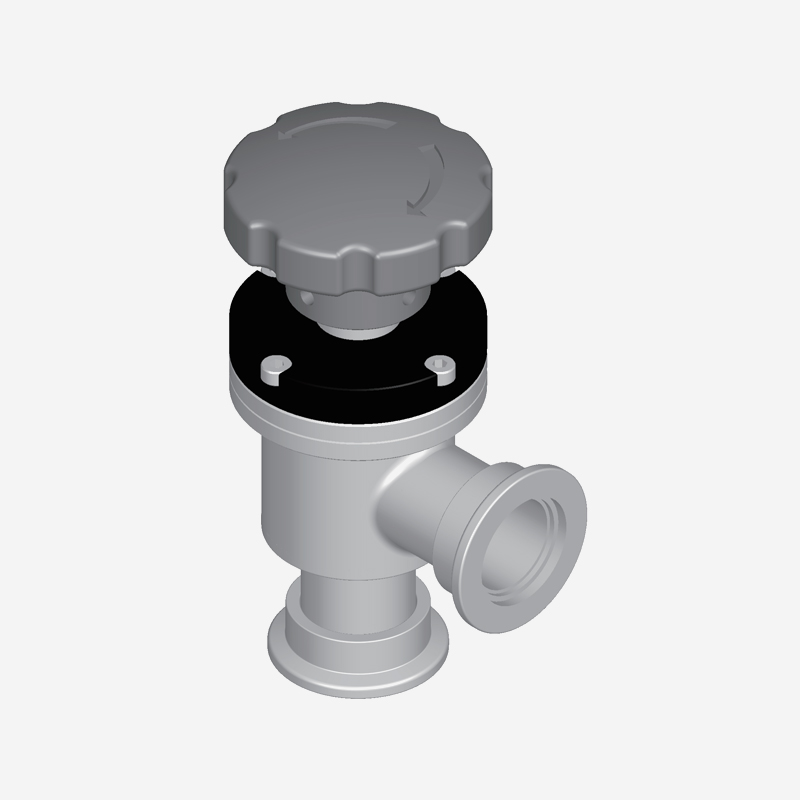
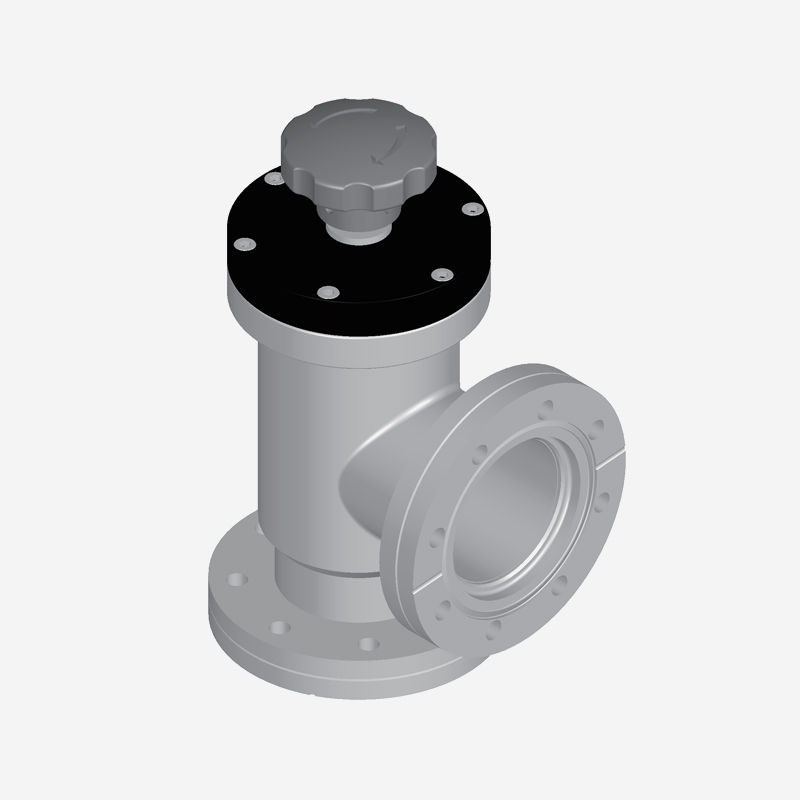
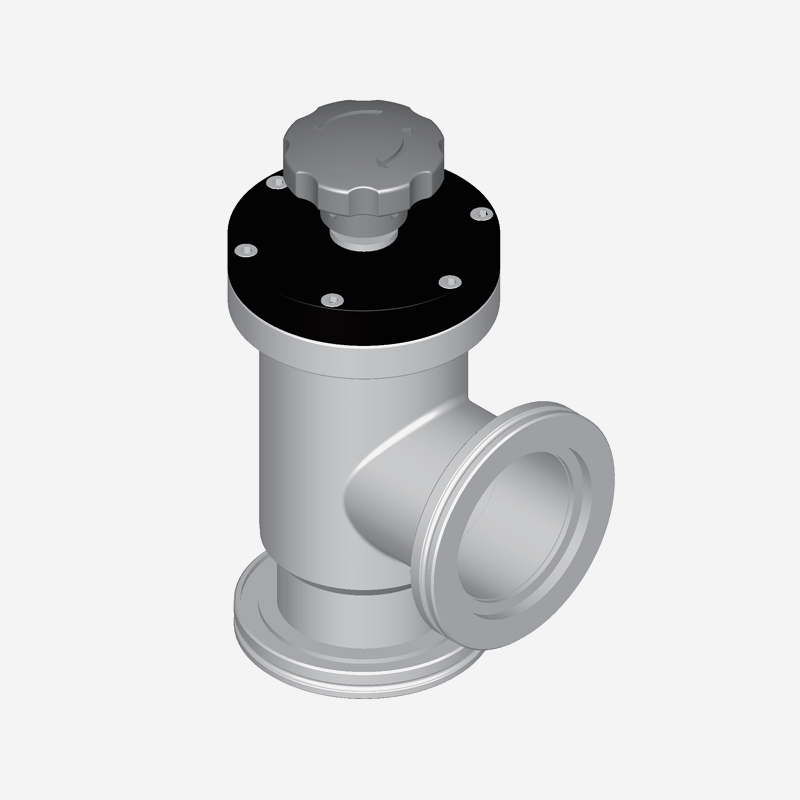
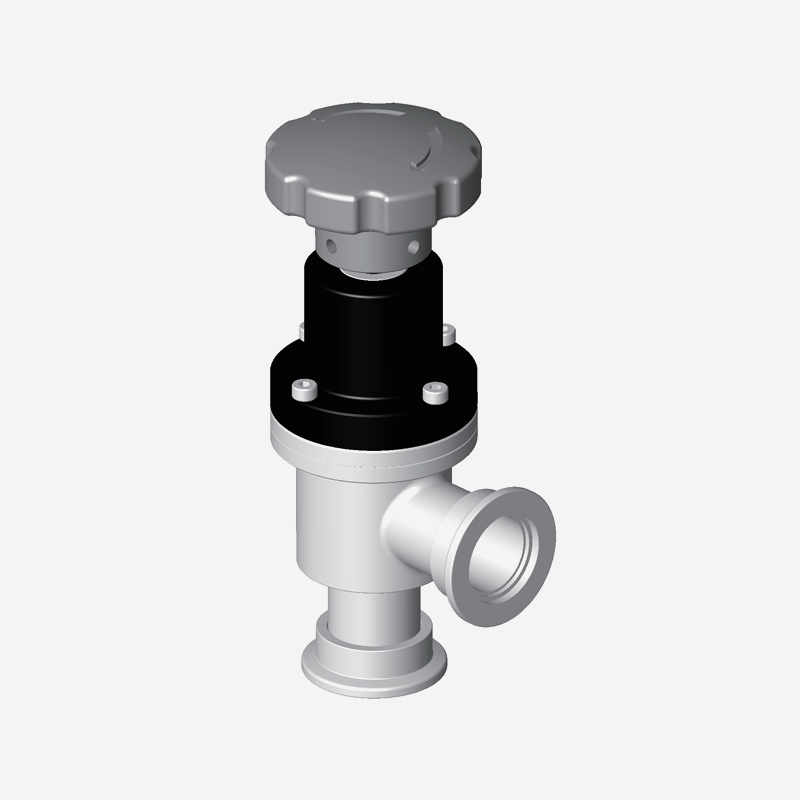
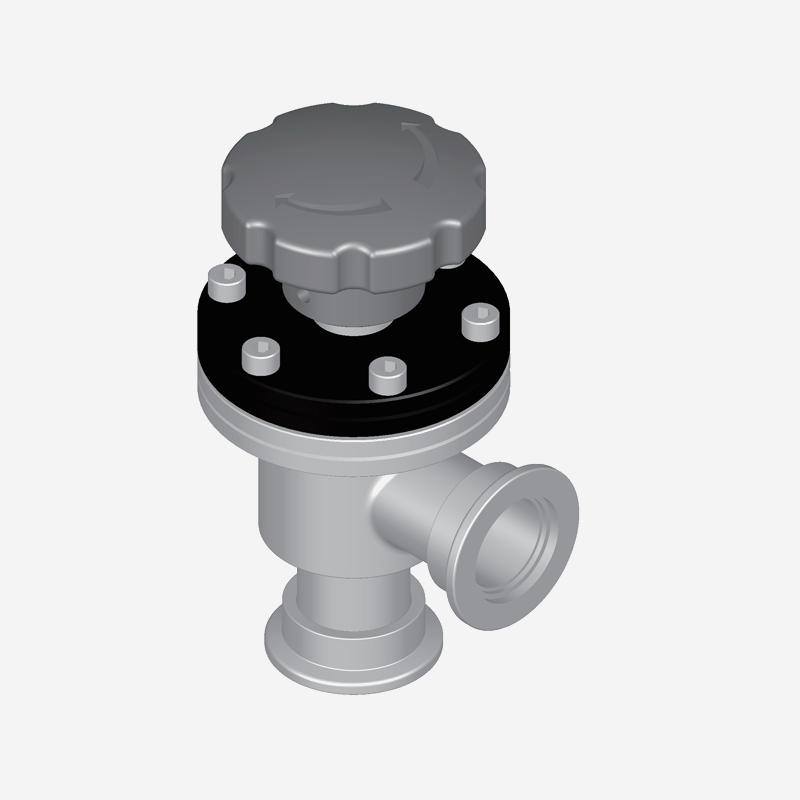
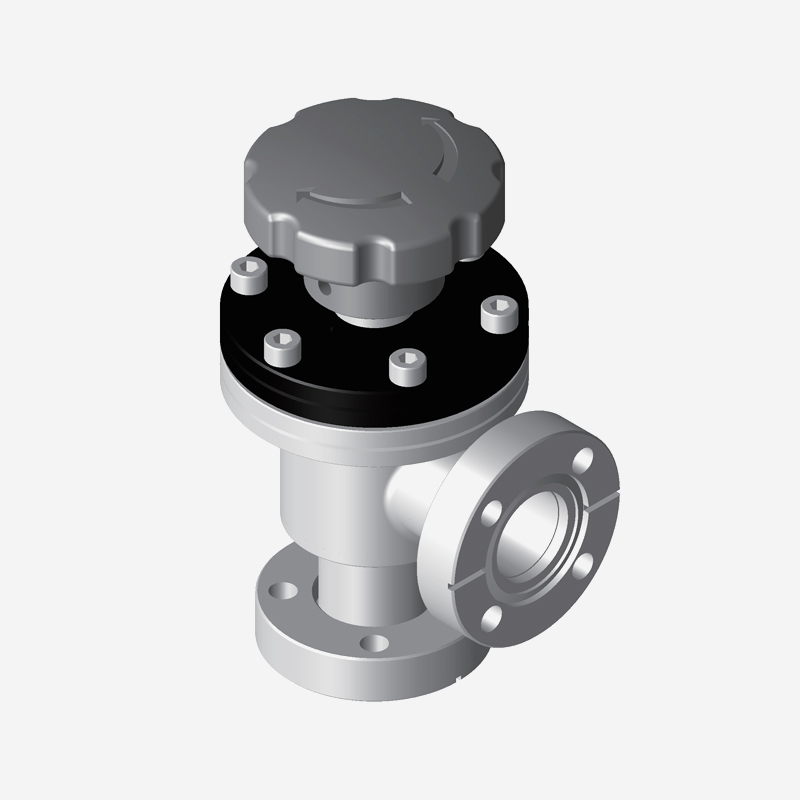
Manual vacuum valves are operated by hand—typically through a handle, handwheel, or lever that directly actuates the sealing mechanism. These valves are positioned as cost‑effective solutions for applications where operation is infrequent and remote control is not required. SUNFUN Group manufactures manual valves in angle and inline configurations, with precision‑machined sealing surfaces that maintain vacuum integrity through repeated operation cycles. As manual vacuum valve products, these components serve simple vacuum systems where operator presence is practical.
Core Functions and Technical Features
Manual valves function through direct mechanical connection between the operating handle and the sealing mechanism. Turning the handle rotates a stem that moves a sealing element—typically a poppet or plate—into position to seal against the valve seat. The mechanical advantage provided by the handle geometry enables the operator to apply sufficient sealing force for vacuum integrity. Manual valves are available with bellows seals that isolate the actuation mechanism from the vacuum environment, preventing dynamic seal leakage. The valve position is indicated by the handle position or by a visual indicator on the valve body.
The primary limitation of manual valves is operator dependency. Seal compression force is determined by the operator's perception of "tight enough," which varies between individuals and over time. This variability can lead to inconsistent sealing performance. Manual valves also require physical presence for operation, limiting their use in automated processes or hazardous environments. These manual vacuum valve products are best suited for applications where operation frequency is low and consistency requirements are moderate.
Typical Application Scenarios
Manual vacuum valves are used in applications where infrequent operation is required. Research laboratories often specify manual valves for experimental setups that are adjusted only occasionally. Industrial vacuum systems with simple operating procedures may use manual valves for isolation functions. Manual valves are also used as backup or bypass valves in systems where automated control is provided by other components.
Differentiation from Pneumatic Valves
Manual valves are distinguished from pneumatic valves by their actuation method, operating speed, and control compatibility. Manual valves require operator presence and physical effort, while pneumatic valves can be operated remotely and integrated with automated control systems. The sealing force in manual valves depends on operator technique, while pneumatic valves provide consistent force determined by system pressure.
SUNFUN Group's Manual Valve Manufacturing
SUNFUN Group's manual valve production applies precision machining and quality control appropriate for vacuum applications. Our 0.001‑mm precision machining ensures that sealing surfaces meet the surface finish and dimensional requirements for reliable vacuum sealing. Through our open innovation ecosystem, we maintain knowledge of manual valve design and application.
Manual Valve Specifications
- Actuation: Handwheel, lever, or handle
- Types: Angle, inline, gate
- Materials: 304/316L stainless steel
- Seals: Elastomer or bellows sealed
- Port sizes: DN 10 to DN 100
- Operating torque: Dependent on valve size and seal type
Product Category 2: Pneumatic Vacuum Valves
Definition and Positioning
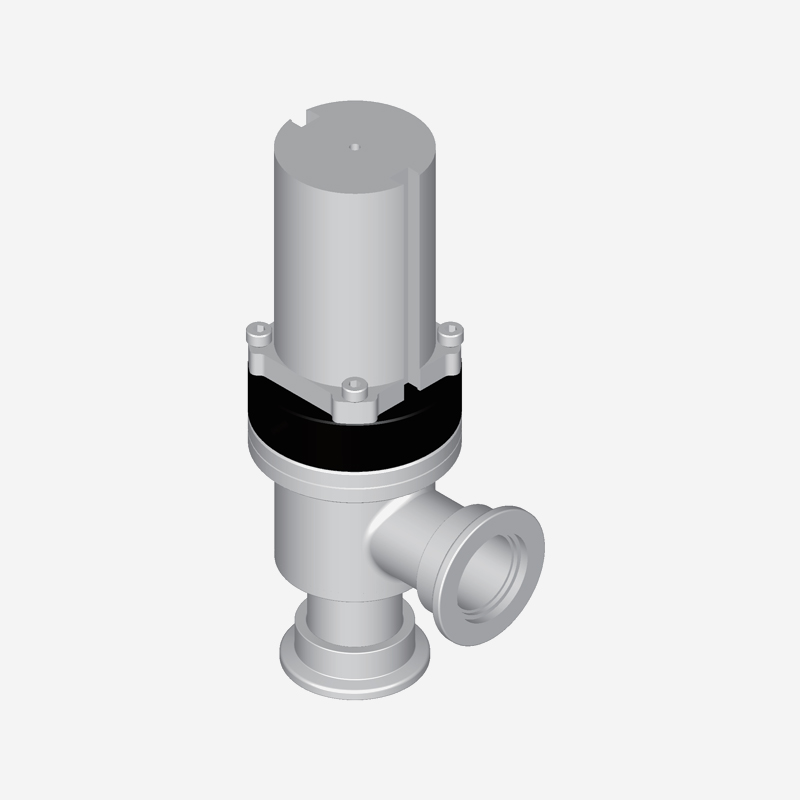
Pneumatic vacuum valves are actuated by compressed air, providing remote operation, fast response, and consistent sealing force independent of operator technique. These valves are positioned as the standard for automated vacuum systems where process timing, reproducibility, and integration with control systems are essential. SUNFUN Group manufactures pneumatic valves in angle, inline, and gate configurations, with precision‑machined sealing surfaces that maintain vacuum integrity through millions of actuation cycles. As pneumatic vacuum valve products, these components enable automated vacuum system operation.
Core Functions and Technical Features
Pneumatic valves function through a cylinder‑actuated mechanism that provides consistent sealing force independent of operator technique. Compressed air applied to the cylinder moves the valve stem, opening or closing the valve. The valve position is determined by the air pressure and the spring return mechanism, providing fail‑safe operation in the event of pressure loss. Pneumatic valves can be single‑acting (spring return) or double‑acting (air pressure both opens and closes), depending on the application requirements.
The advantages of pneumatic over manual valves are substantial. Actuation speed ranges from milliseconds to seconds, enabling precise process timing. Remote operation allows valves to be controlled from central panels or automated systems, eliminating the need for operator presence in hazardous areas. Consistent sealing force ensures repeatable performance across all actuation cycles. Position sensors provide feedback to control systems, enabling monitoring and automation. These pneumatic vacuum valve products support the integration of vacuum systems with facility‑wide process control.
Typical Application Scenarios
Pneumatic vacuum valves are used throughout semiconductor fabrication, research facilities, and industrial vacuum systems. Semiconductor process tools use pneumatic valves for gas introduction, chamber isolation, and pumping line control. Research facilities specify pneumatic valves for automated sequences where timing and reproducibility are critical. Industrial vacuum systems with multiple process steps use pneumatic valves for sequence control.
Differentiation from Manual Valves
Pneumatic valves are distinguished from manual valves by their actuation method, remote control capability, and operating speed. Pneumatic valves enable automated process control, while manual valves require operator presence. The consistent sealing force of pneumatic valves provides superior repeatability compared to manual valves. These advantages make pneumatic valves the preferred choice for modern vacuum systems.
SUNFUN Group's Pneumatic Valve Manufacturing
SUNFUN Group's pneumatic valve production applies precision machining and quality control appropriate for automated vacuum applications. Our accredited technology enterprise status—demonstrated through national‑level R&D tasks and projects commissioned by the NDRC, MOST, and MIIT—supports quality systems for pneumatic vacuum valve products.
Pneumatic Valve Specifications
- Actuation: Compressed air (3‑7 bar)
- Types: Angle, inline, gate, butterfly
- Materials: 304/316L stainless steel
- Seals: Bellows sealed standard
- Port sizes: DN 10 to DN 200
- Cycle life: >1,000,000 cycles
- Position sensing: Optional integrated sensors
Product Category 3: Pneumatic Angle Valves for Process Applications
Definition and Positioning
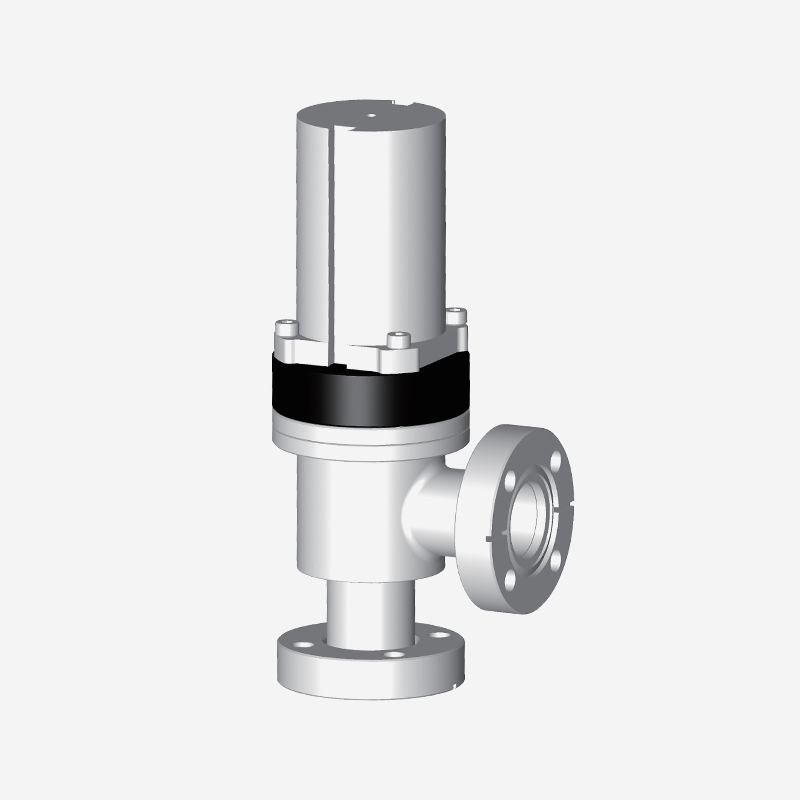
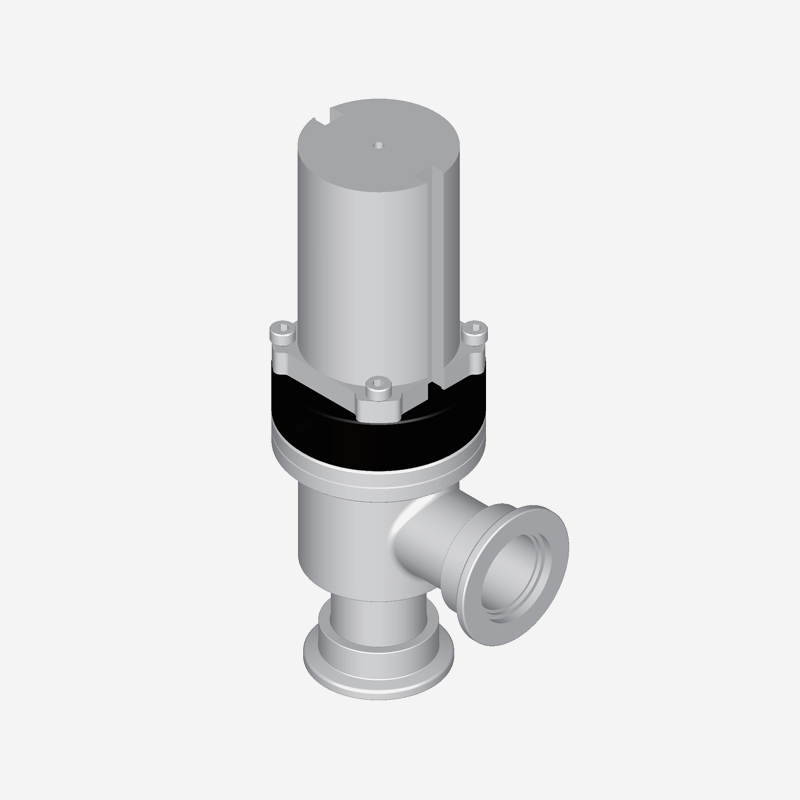
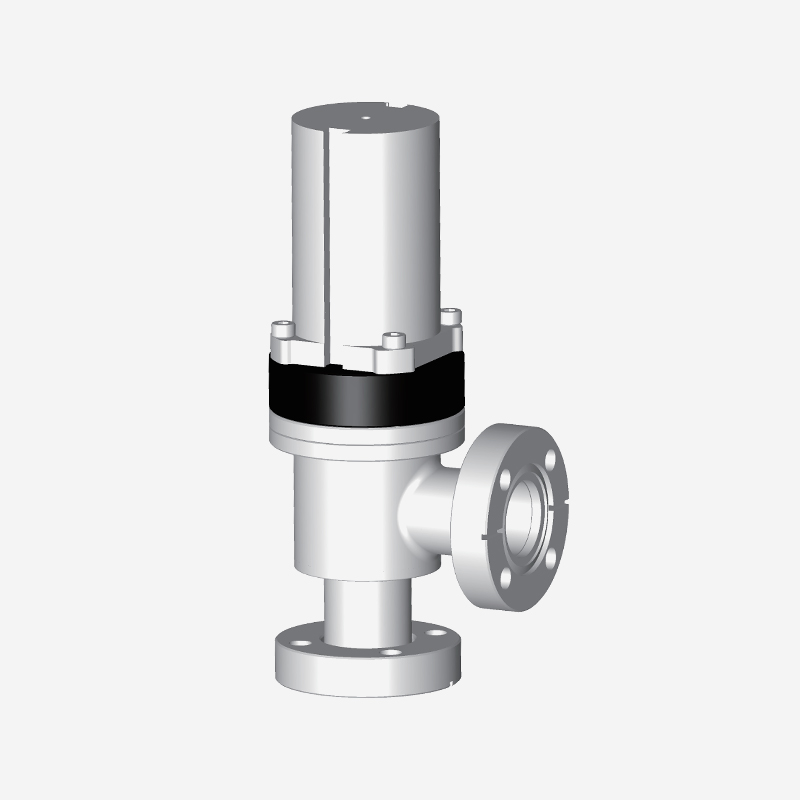
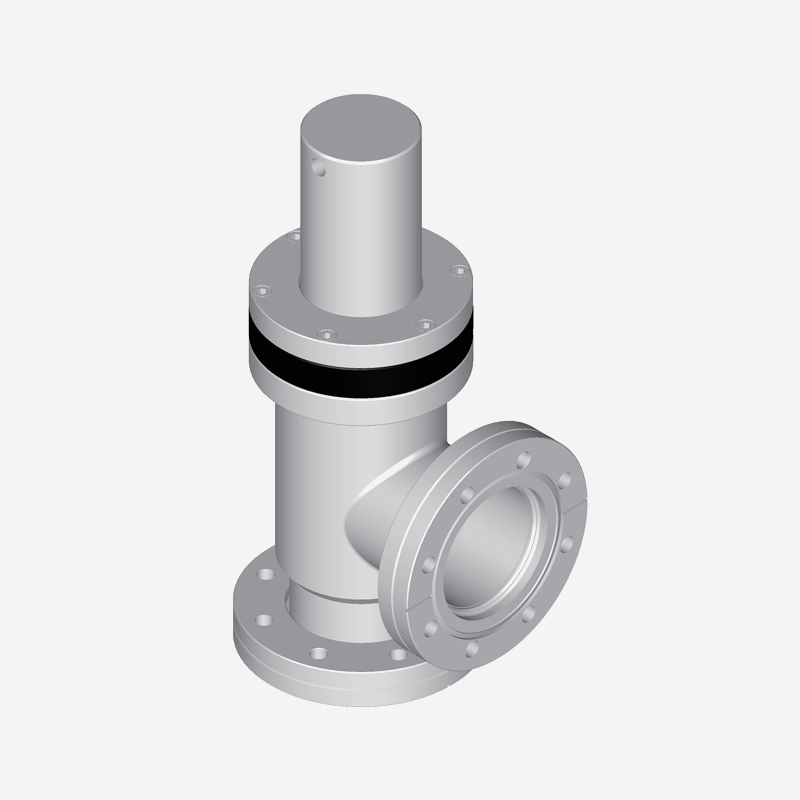
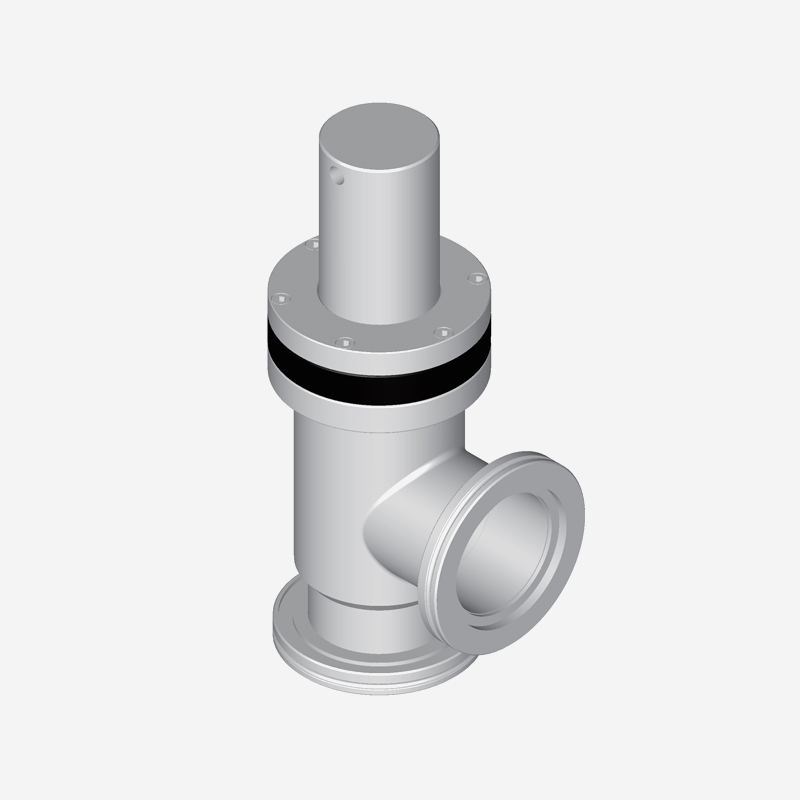
Pneumatic angle valves are a specific type of pneumatic valve featuring a 90° flow path, commonly used for gas introduction, roughing line control, and pumping system isolation. These valves are positioned as versatile components for vacuum process control, offering the advantages of pneumatic actuation in a compact angle configuration. SUNFUN Group manufactures pneumatic angle valves with precision‑machined sealing surfaces and bellows‑sealed actuation, supporting the demanding requirements of semiconductor processing. As vacuum angle valve products, these components serve critical roles in automated vacuum systems.
Core Functions and Technical Features
Pneumatic angle valves provide a 90° flow path with a sealing mechanism that moves into position to seal against the valve seat. The angle configuration enables compact installation in space‑constrained systems. Bellows sealing isolates the pneumatic actuator from the vacuum environment, eliminating dynamic seal leakage. The valve is available with normally closed, normally open, or double‑acting configurations, depending on the application requirements.
The pneumatic angle valve offers specific advantages in process applications. The compact footprint supports dense equipment layouts. The bellows‑sealed actuation provides long cycle life with minimal maintenance. The rapid actuation speed enables precise control of process timing. The integration of position sensors provides feedback to process control systems. These vacuum angle valve products are essential for automated vacuum process control.
Typical Application Scenarios
Pneumatic angle valves serve multiple functions in vacuum systems. Process gas introduction lines use angle valves for precise flow control. Roughing pump isolation requires reliable angle valves for system integrity. Vent valves use angle configurations for controlled pressure release. The compact design makes angle valves suitable for equipment with limited space.
Differentiation from Straight Valves
Pneumatic angle valves are distinguished from straight valves by their 90° flow path, which enables more compact system layouts. The angle configuration also supports specific routing requirements where direct connections are not possible.
SUNFUN Group's Angle Valve Manufacturing
SUNFUN Group manufactures pneumatic angle valves with the precision required for semiconductor and research applications. Our in‑house institute and talent academy provide technical expertise in valve design and application. Through our open innovation ecosystem, we maintain knowledge of evolving process requirements for vacuum angle valve products.
Key Specifications Comparison
| Parameter |
Manual Valve |
Pneumatic Valve |
Pneumatic Angle Valve |
| Actuation method |
Hand operation |
Compressed air |
Compressed air |
| Remote control |
No |
Yes |
Yes |
| Actuation speed |
Operator dependent |
Rapid |
Rapid |
| Sealing force |
Operator dependent |
Consistent |
Consistent |
| Flow path |
Angle or inline |
Angle or inline |
90° angle |
| Automation compatibility |
Low |
High |
High |
Pneumatic vacuum valves provide significant advantages over manual valves in semiconductor and research applications—including remote operation, faster actuation, consistent sealing force, and compatibility with automated process control systems. SUNFUN Group manufactures a comprehensive range of manual and pneumatic vacuum valves, applying precision machining and quality control developed over four decades of experience. Our 0.001‑mm precision machining ensures that valve sealing surfaces meet the dimensional requirements for reliable vacuum performance. Through our in‑house institute, talent academy, and open innovation ecosystem—established in partnership with governments, enterprises, universities, and institutions—SUNFUN Group maintains the technical expertise required for pneumatic vacuum valve products in the most demanding applications.
Frequently Asked Questions
Q1: Which is better—a pneumatic or manual vacuum valve?
The choice depends on the application. Pneumatic valves are preferred for automated systems, remote operation, and processes requiring consistent timing. Manual valves may be adequate for infrequent operations and simple systems where cost is the primary consideration. Manual vacuum valve products remain useful for certain applications.
Q2: What is the typical actuation speed of a pneumatic vacuum valve?
Actuation speed depends on valve size, air pressure, and valve type. Small pneumatic angle valves can actuate in 100‑300 milliseconds. Larger gate valves may require several seconds. Pneumatic vacuum valve products offer significantly faster operation than manual valves.
Q3: Can a pneumatic valve be operated without compressed air?
Some pneumatic valves include manual override features that allow manual operation in the absence of air pressure. However, the primary actuation method remains pneumatic. Vacuum angle valve products with manual overrides provide flexibility for system commissioning and maintenance.
Q4: What quality controls apply to SUNFUN Group's vacuum valve manufacturing?
SUNFUN Group applies material certification, dimensional verification, surface finish measurement, leak testing, and cycle testing to all vacuum valve production. Our accredited technology enterprise status supports comprehensive quality systems for pneumatic vacuum valve products, ensuring consistent valve performance.


 English
 日本語
日本語
 عربى
عربى
 中文简体
中文简体