

 English
 日本語
 عربى
 中文简体


High Vacuum and Ultra-High Vacuum General Semiconductor Vacuum Chambers
Meeting HV and UHV standards, these chambers are rigorously helium leak-tested to ensure ultra-low l...

Content
When you design a high vacuum system, the pump and chamber usually get the most attention. In practice, the components that connect everything - flanges, gaskets, adapters, valves, and feedthroughs - determine how quickly the system pumps down, how low it goes, and how long it stays there. A single incorrect seal can turn a clean process into a contamination problem. That is why high vacuum components are not an afterthought; they are the engineering foundation.
High vacuum is generally defined as pressures from about 1e-3 to 1e-7 mbar. Above that range is rough vacuum; below it is ultrahigh vacuum. Each transition changes the design rules. At high vacuum, elastomer seals are still acceptable, but the materials must be vacuum-grade. At ultrahigh vacuum, all-metal seals, bakeable flanges, and careful surface treatment become necessary.
Component selection starts with pressure range, then adds temperature, process gas chemistry, and required uptime. The same flange that works for a nitrogen purge line may fail in a plasma process if the O-ring is exposed to reactive species. Matching each component to its operating envelope is the fastest way to avoid leaks and downtime.
Rule of thumb: If the system will be baked, choose metal-sealed components. If it can tolerate elastomer seals, KF hardware saves assembly time.
| Standard | Typical Size Range | Seal Type | Best Fit |
|---|---|---|---|
| KF (NW) | DN10-DN50 | Elastomer O-ring | Rough and high vacuum, fast assembly |
| CF | DN16-DN250 | Copper gasket | UHV, bakeable systems |
| ISO-K / ISO-F | DN63-DN500 | O-ring | High vacuum, larger lines |
| JIS VG/VF | Various | O-ring or metal | Legacy and Asian spec equipment |
A reliable high vacuum system is built from several families of components. Spend time on each category before locking the bill of materials.
The chamber provides the process volume and the mounting points for everything else. Stainless steel is the usual choice for high vacuum because of low outgassing and good weldability. Aluminum is common in larger batch systems where weight and cost matter. Surface finish and internal welds should be clean and well inspected.
Flanges are the connection language of a vacuum system. KF fittings are fast to assemble and work well for pump lines, gauge ports, and small vacuum systems. CF flanges use a copper gasket and are the standard choice for UHV and bakeable systems. Adapters let you move from one standard to another, but every transition adds a potential leak path, so keep them minimal.
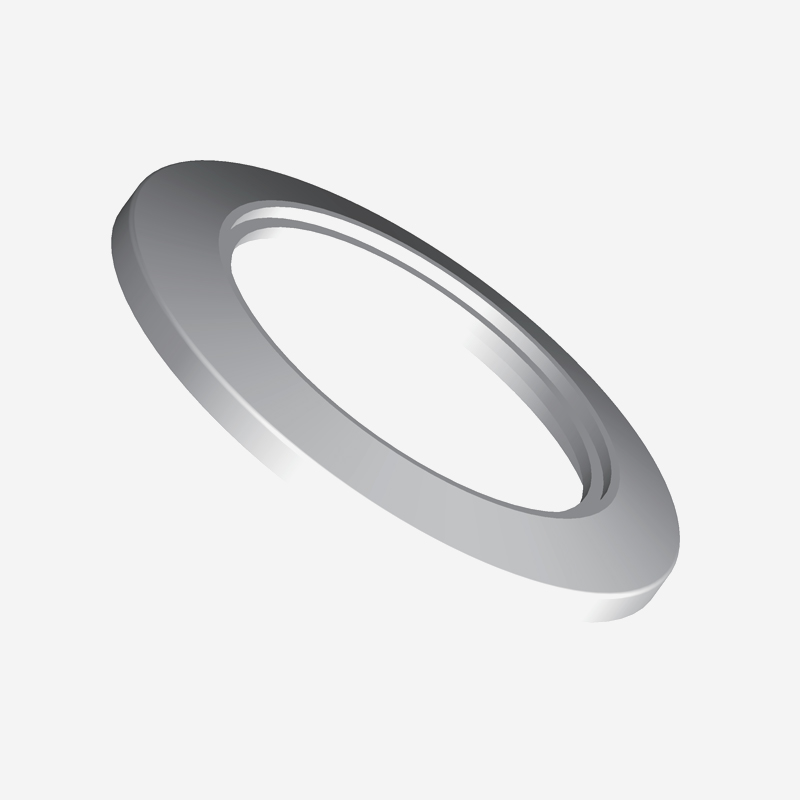 KF Flange with SUS304 Construction for Quick Vacuum ConnectionsA KF flange is ideal for fast assembly on pump lines, gauge ports, and small vacuum systems. Verify temperature and chemical compatibility, especially for high vacuum elastomer seal applications.View Product →
For elastomer seals, FKM materials cover a wide range of high vacuum applications, but temperature and chemical compatibility need to be checked. For UHV, annealed oxygen-free copper gaskets are compressed between CF knife edges to form a metal seal. Never mix gasket types unless the joint design explicitly allows it.
Power, motion, and optical access cross the vacuum boundary through feedthroughs and viewports. These components must match the same leak-tightness, bakeout, and material requirements as the rest of the system. A low-quality viewport can outgas and quickly degrade an otherwise clean process.
If you are specifying a new assembly, the flange standard is the first decision. KF, CF, and ISO are the three families you will meet most often. Do not rely on visual similarity: each family has its own sealing mechanism and dimensional tolerances.
KF/NWCFISO-KJIS VG/VF
For a metal-sealed UHV connection, a CF flange with a rotatable or non-rotatable design must match the available space and tool access. Many designers choose a non-rotatable flange when orientation is fixed. The product below is a typical example of a non-rotatable CF flange used in UHV assemblies.
 Non-Rotatable CF Flange for Fixed Orientation UHV JointsThis non-rotatable CF flange suits UHV assemblies where orientation is fixed, using copper gaskets to form reliable metal seals. Choose this design when tool access and space are constrained.View Product →
Valves isolate sections, protect pumps, and control process pressure. Each type has a specific role. Angle valves are compact and common on pump lines; gate valves provide a large, unobstructed opening; butterfly valves are often used for downstream pressure control. The right selection depends on cycle life, pressure range, and required conductance.
For manual isolation on a modest high vacuum line, a bellows-sealed angle valve with a KF flange is a practical starting point. It gives a metal-bellows stem seal, so atmosphere cannot leak into the vacuum through a sliding O-ring. If you need automation, choose a pneumatic actuator with position indication and a solenoid valve. Always confirm the manufacturer's specified leak rate and cycle life.
 Manual Bellows-Sealed Angle Valve with KF Flange for HV LinesThis manual angle valve provides a metal-bellows stem seal to prevent atmosphere leakage in high vacuum lines. Confirm the specified leak rate and cycle life for your isolation or control needs.View Product →
High vacuum components affect yield in industries where contamination and leaks are expensive. In semiconductor processing, a small leak in a chamber can add oxygen to a deposition process and degrade the film. In thin-film coating, an unstable valve can shift process pressure and change coating color. In research, a viewport with high outgassing can increase dark current in a detector or ruin a surface science measurement. Component selection is therefore a process decision, not just a hardware detail.
When the components arrive, the documents can be as important as the parts. Ask for material certificates, dimensional inspection reports, and helium leak test results where applicable. A reliable high vacuum component supplier should be able to explain how their flanges are machined and what their leak test procedures cover.
Look for a partner that understands the full system, not just one product family. If a manufacturer also builds chambers and valves, they are more likely to understand how the components interact. SUNFUN's vacuum component range covers everything from standard flanges to large custom chambers. Before comparing quotes, it is also worth understanding how precision machined parts are manufactured, because the same tolerance and inspection decisions influence vacuum component quality.
KF flanges use an elastomer O-ring and a quick clamp, and they are made for smaller diameters, typically up to DN50. CF flanges use a copper gasket and a knife-edge seal, are bakeable, and are used for UHV. If you need to bake a joint, choose CF.
Not without checking. UHV valves need metal seals or very low outgassing alternatives, plus bakeout capability. A high vacuum valve may have too high an outgassing rate or may not withstand bakeout. Verify the valve leak rate and temperature rating before installing it in a UHV line.
A component can look mechanically perfect and still leak through a microscopic crack or poor weld. Helium leak testing detects leaks that dimensional inspection cannot see. For high vacuum service, a helium leak rate below 1e-9 mbar L/s is a practical target for many components.
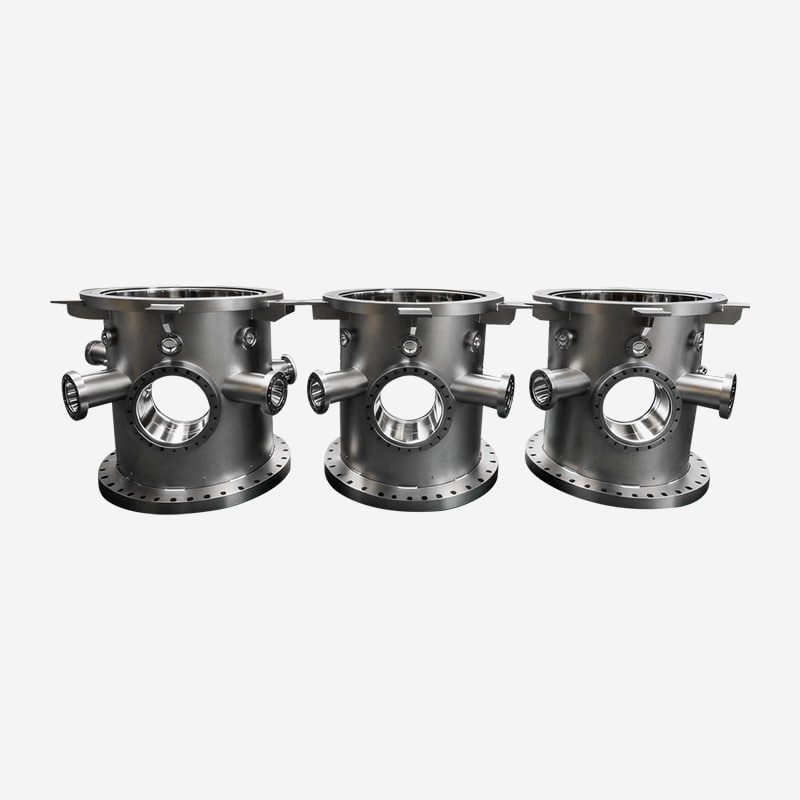
Meeting HV and UHV standards, these chambers are rigorously helium leak-tested to ensure ultra-low l...
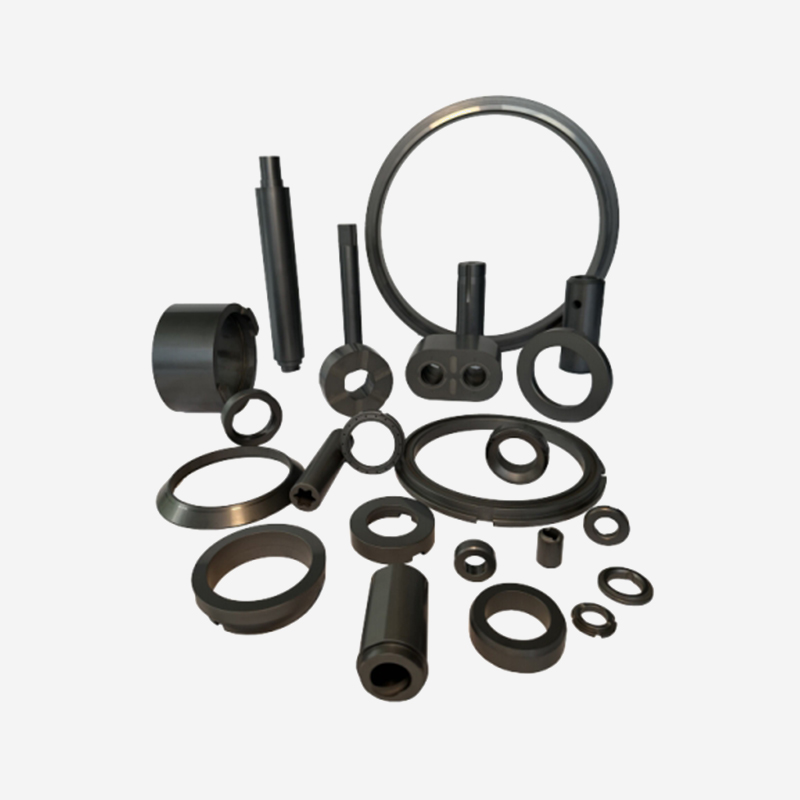
Silicon carbide materials have extremely high hardness and strength, excellent wear resistance and a...
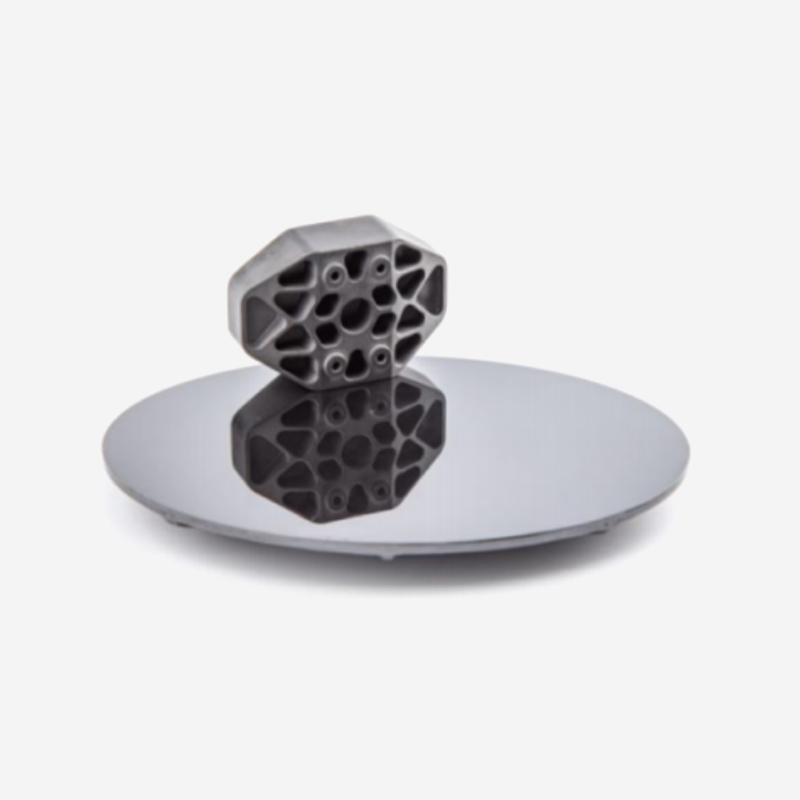
Silicon carbide features an extremely low porosity, a uniform and dense microstructure, a low densit...
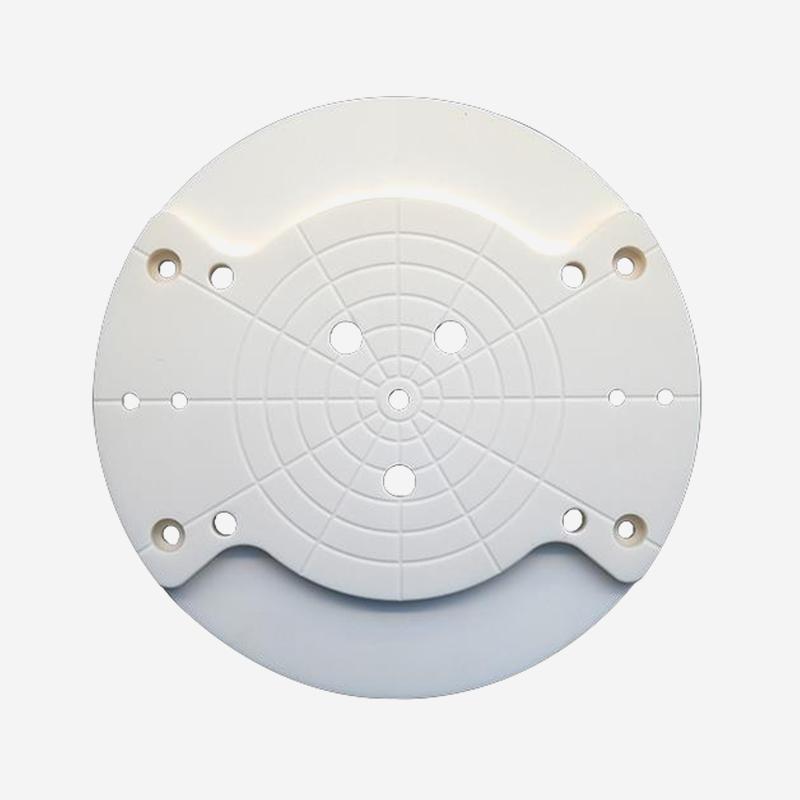
Product Features Clean and precise: Smooth surface (not easy to scratch the workpiece), uniform and ...
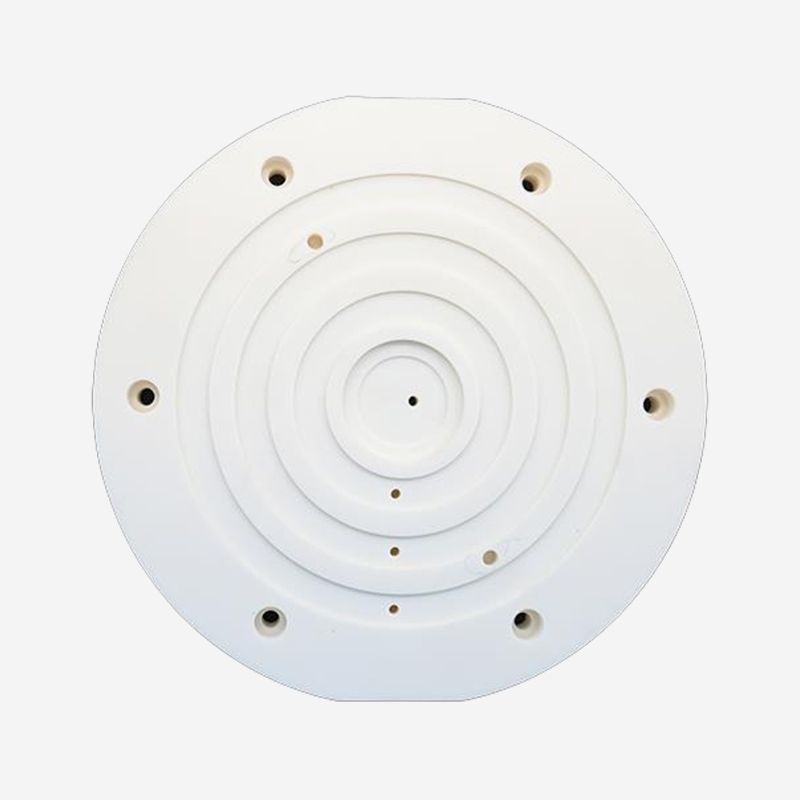
Product Features High cleanliness: Smooth surface, dust-free, suitable for precision workpieces such...
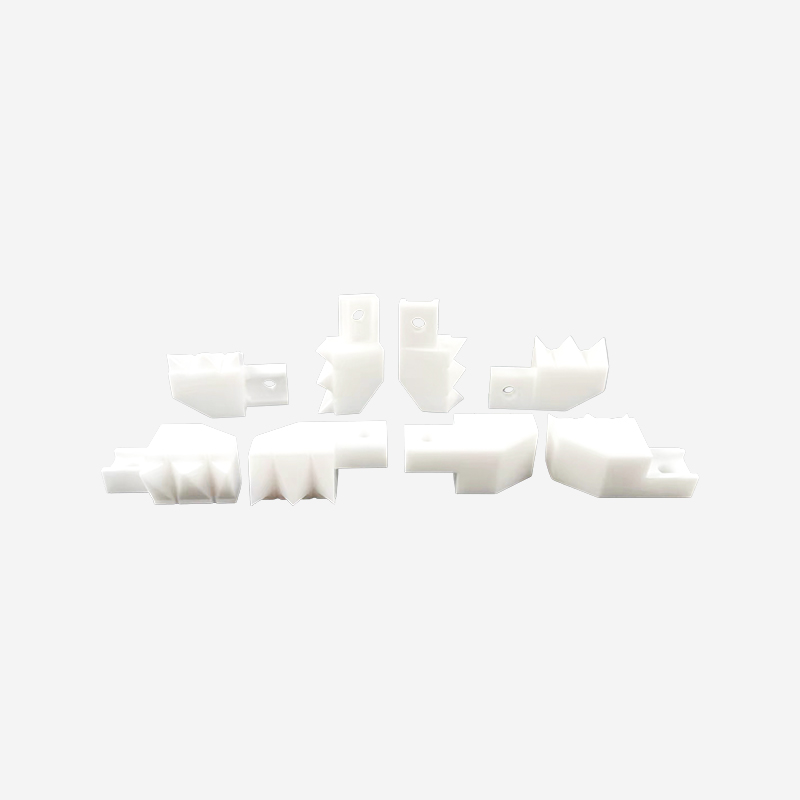
Specializing in ultra-tight tolerances, our machined ceramic plates and custom parts are tailored to...
Ready to Innovate Together? Contact Our Experts.

Contact Us
Address: 288 Shande Road, Shanyang Town, Jinshan District, Shanghai, China TEL/WhatsApp:Mobile terminal