Content
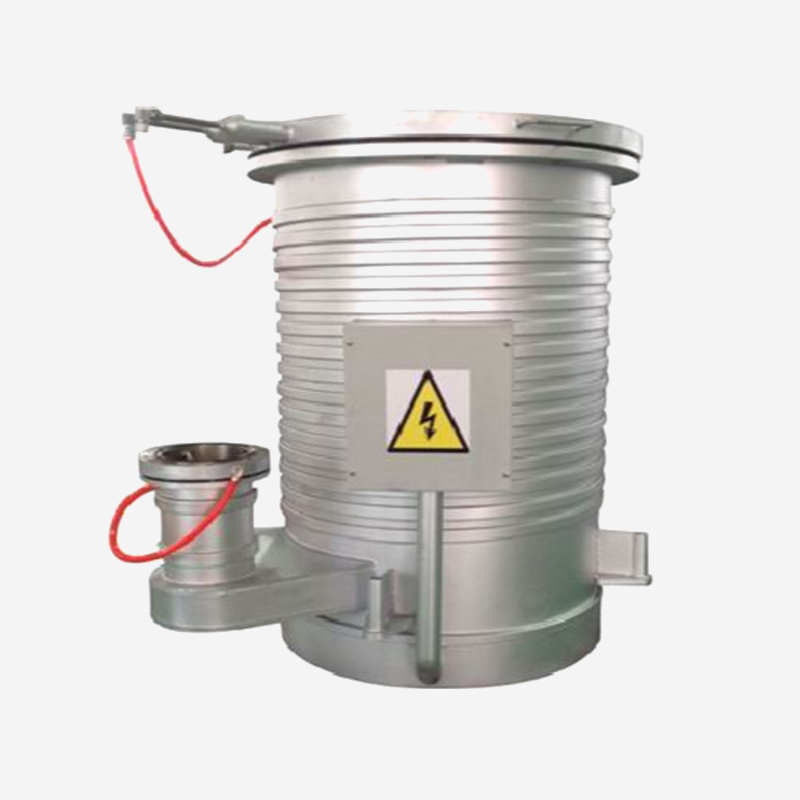
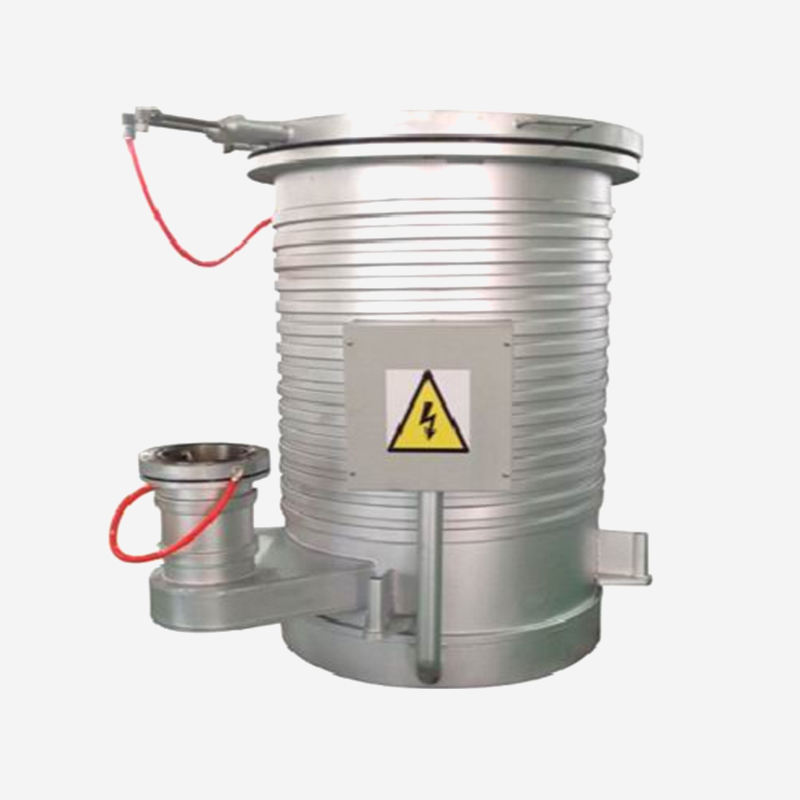
Anyone who has walked past a coating line or a metallurgy furnace room has probably seen a tall, cylindrical vessel bolted beneath the chamber, wrapped in cooling coils, with almost no visible moving components. That is typically a high vacuum oil diffusion pump, and its job is to take a chamber that has already been roughed down by a mechanical pump and push it further into the high vacuum range, often reaching pressures in the range of 10 to the negative 4 to 10 to the negative 7 torr region depending on the design and backing conditions.
Unlike rotary vane or scroll pumps, a diffusion pump has no pistons, rotors, or seals in the pumping path. It relies entirely on a physical phenomenon: a fast-moving stream of vaporized fluid that captures gas molecules and directs them toward the outlet. This absence of moving parts is part of why diffusion pumps remain common in facilities that need continuous, reliable operation over years without wear-related failure.
In practice, diffusion pumps are almost never used alone. They depend on a backing pump to remove gas from the outlet side and maintain the pressure differential the vapor jet needs to function correctly.
The core of the oil diffusion pump working principle is a heated boiler at the base of the pump body, filled with a low vapor pressure fluid, commonly a silicone-based oil chosen for its thermal stability. A heater beneath the boiler brings this fluid to a controlled boil, generating vapor that rises through a central chimney assembly built from stacked nozzle stages, usually three or four in a typical industrial unit.
As the vapor exits each nozzle, it expands outward and downward at high velocity, forming a cone-shaped jet. Gas molecules drifting into this jet are struck repeatedly by vapor molecules and pushed in the direction of the jet's travel, which is toward the bottom of the pump and the outlet connection. This is molecular entrainment: light gas molecules do not get trapped so much as they get shepherded, collision by collision, toward the exhaust.
Once the vapor jet reaches the water-cooled outer wall, it condenses back into liquid and drains down to the boiler to be reheated, completing a continuous fluid boiling and condensation cycle. This cycle is what allows the pump to run for extended periods without fluid replenishment, provided the cooling water supply and heater controls remain stable.
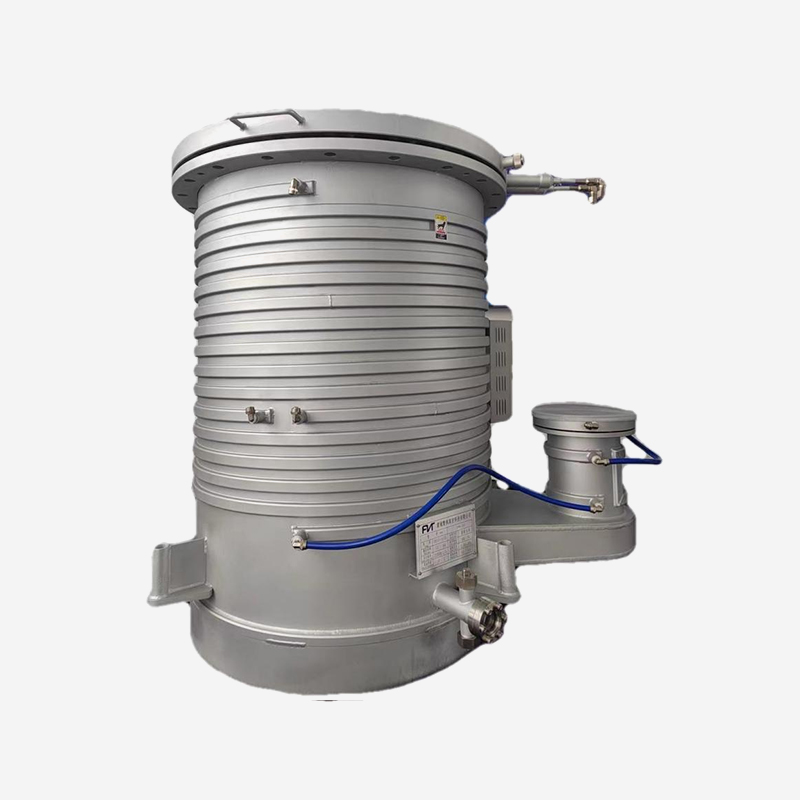
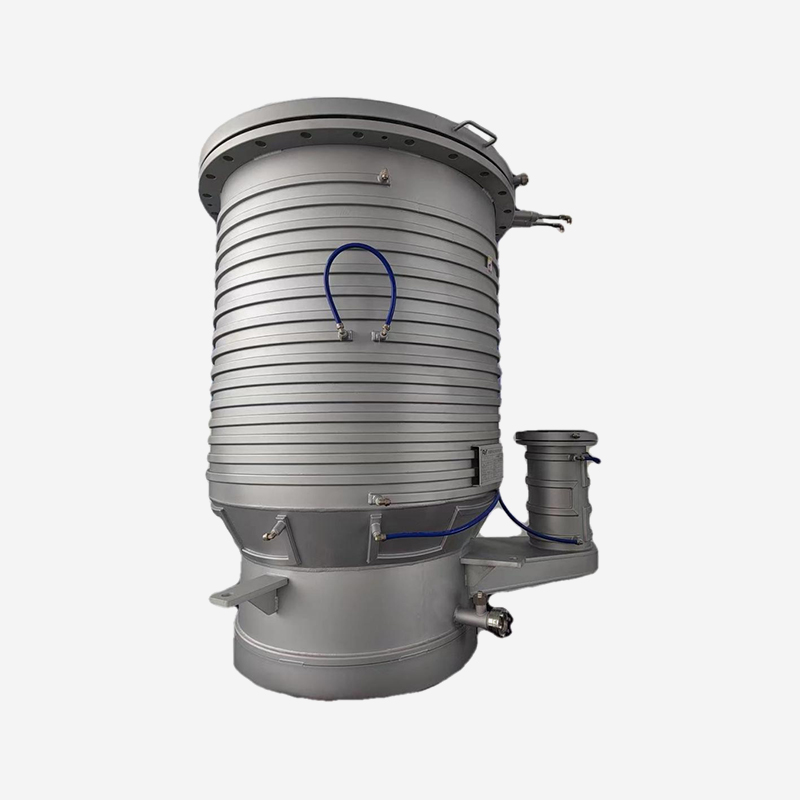
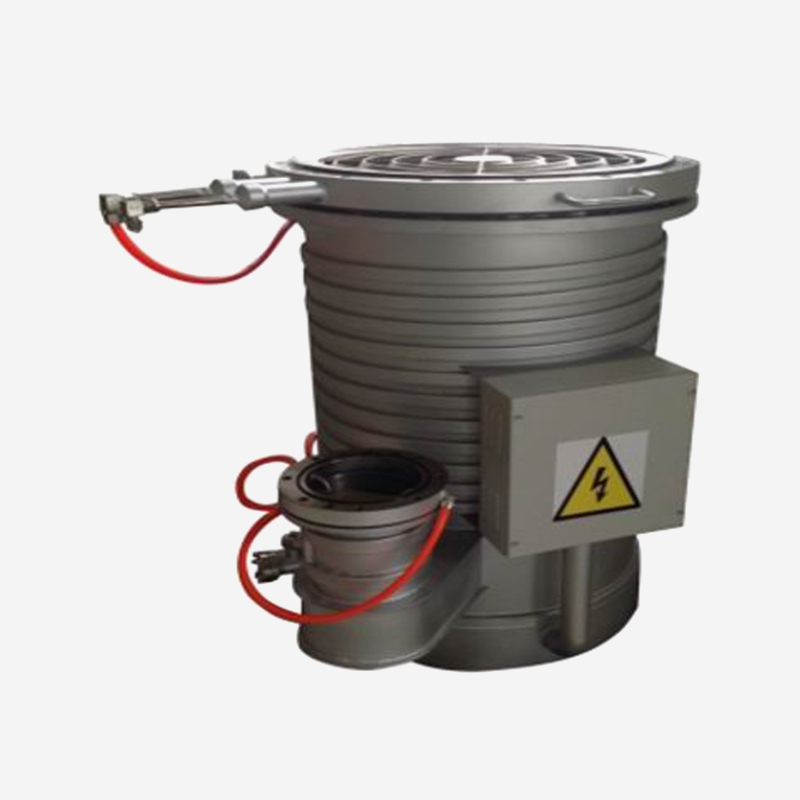
A diffusion pump's body is deceptively simple in appearance, but each component is engineered to a narrow tolerance because the geometry of the nozzles directly determines pumping speed and ultimate pressure. The table below summarizes the primary parts and their function within the assembly.
| Component | Function |
|---|---|
| Boiler and Heater | Vaporizes the working fluid at a controlled, even temperature |
| Nozzle Stack (Jet Assembly) | Shapes and accelerates the vapor into directional jets |
| Water-Cooled Outer Wall | Condenses vapor back to liquid, forming a water-cooled cold cap effect near the top |
| Baffle or Cold Cap | Reduces backstreaming of fluid vapor into the process chamber |
| Inlet Flange | Connects to the high vacuum chamber |
| Foreline and Outlet | Connects to the backing pump or mechanical booster pump |
The baffle deserves particular attention. Because the pumping fluid is itself a vapor circulating at high speed, some molecules inevitably drift upward toward the chamber rather than condensing on the wall. A properly designed cold cap or chevron baffle, kept several tens of degrees cooler than the pump body, intercepts most of this backstreaming before it can contaminate the process chamber.
Diffusion pump pumping speed is typically expressed in liters per second and varies with inlet diameter, nozzle design, and the pressure regime in which the pump is operating. Speed is highest in the mid-range of the pump's operating envelope and tapers off as pressure approaches the pump's ultimate limit, since there are simply fewer gas molecules left for the vapor jet to intercept.
Ultimate vacuum pressure, on the other hand, is governed less by nozzle size and more by fluid quality, backstreaming control, and the cleanliness of the chamber and seals. A pump with a large nozzle can move a great deal of gas quickly without necessarily reaching a lower ultimate pressure than a smaller, well-baffled unit.
The choice of diffusion pump fluid affects nearly every performance metric that matters: ultimate pressure, backstreaming rate, thermal stability, and resistance to oxidation. Silicone-based fluids dominate modern industrial installations because they tolerate accidental air exposure at operating temperature far better than older mineral oil formulations, which could degrade or oxidize if the chamber was vented while the boiler was still hot.
Operators typically monitor fluid condition through periodic sampling, watching for discoloration or a rise in ultimate pressure over time, both of which suggest the fluid has begun to break down or has absorbed contaminants from the process side.
No single diffusion pump design excels at everything simultaneously. Larger nozzle stacks favor throughput, tighter baffling favors cleanliness, and simpler geometries favor lower maintenance. The radar chart below illustrates how three general configuration types trade off across five common evaluation criteria on a relative 1 to 5 scale.
Because diffusion pumps combine high throughput with mechanical simplicity, they remain a common choice anywhere a large chamber volume needs to be held at high vacuum continuously for hours or days at a time.
In industrial vacuum coating systems, diffusion pumps hold large deposition chambers at the pressure needed for uniform thin-film formation, whether the process is optical coating, decorative metallization, or functional barrier coating on flexible substrates.
Vacuum metallurgy equipment, including vacuum induction melting and vacuum arc remelting furnaces, relies on diffusion pumps to remove dissolved gases from molten metal and prevent oxidation during processing, which is essential for producing high-purity alloys used in aerospace and specialty steel production.
Space simulation test chambers use diffusion pumps, often in combination with cryopumps, to replicate the near-vacuum conditions spacecraft components will experience, supporting outgassing tests and thermal-vacuum qualification cycles before hardware is cleared for flight.
High vacuum research equipment across surface science, thin-film deposition research, and materials characterization also depends on the same oil diffusion pump working principle to achieve the clean, low-pressure environment that sensitive measurements require.
Diffusion pumps reward consistent operating discipline more than they punish occasional mistakes, but a few habits make a measurable difference in service life and performance stability.
Facilities that follow a structured preventive maintenance schedule generally see diffusion pumps run for many years between fluid changes or nozzle refurbishment, which is part of why the technology remains cost-competitive against newer pumping methods for large-volume applications.
A diffusion pump uses a heated vapor jet with no moving parts in the pumping path, while a turbomolecular pump uses high-speed spinning blades. Diffusion pumps tend to favor large-volume, continuous operations, while turbomolecular pumps favor faster start-up and cleaner processes with fewer hydrocarbon concerns.
With a well-maintained baffle system and quality fluid, many industrial diffusion pumps reach the 10 to the negative 6 to 10 to the negative 7 torr range, though actual performance depends heavily on chamber cleanliness, seal quality, and backing pump condition.
The vapor jet mechanism only functions correctly within a specific foreline pressure range. Without a backing pump continuously removing gas from the outlet side, the pressure differential the jet depends on collapses and pumping stops working effectively.
This depends heavily on operating hours, process contamination, and how often the pump is thermally cycled. Many facilities inspect fluid condition on a quarterly basis and replace it when discoloration or a measurable rise in ultimate pressure appears.
Diffusion pumps are generally better suited to clean, gas-phase pumping rather than processes generating heavy particulate load, since particulates can contaminate the fluid and reduce baffle effectiveness over time.
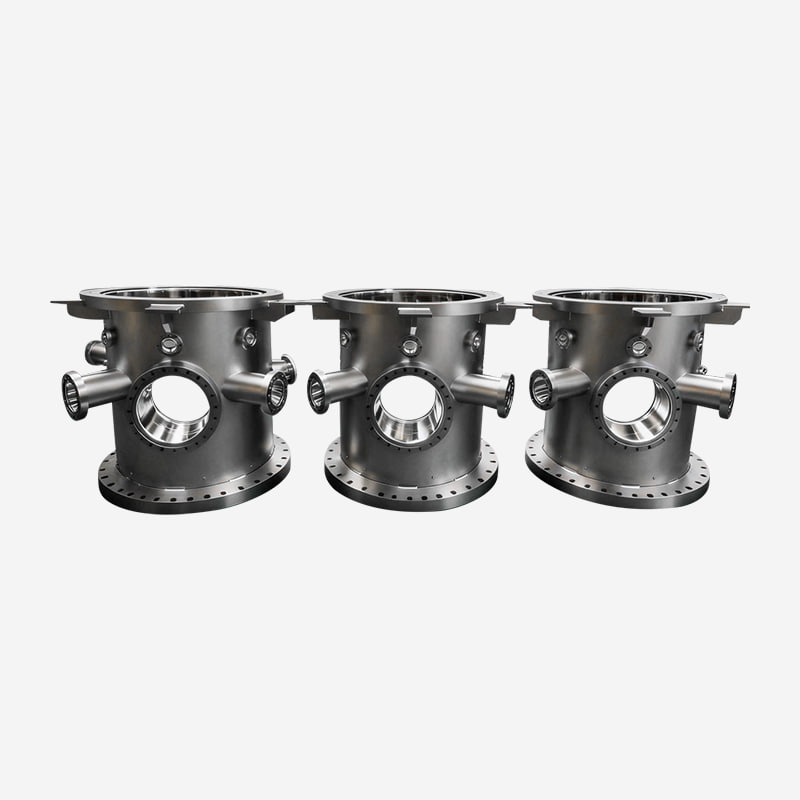
Meeting HV and UHV standards, these chambers are rigorously helium leak-tested to ensure ultra-low l...
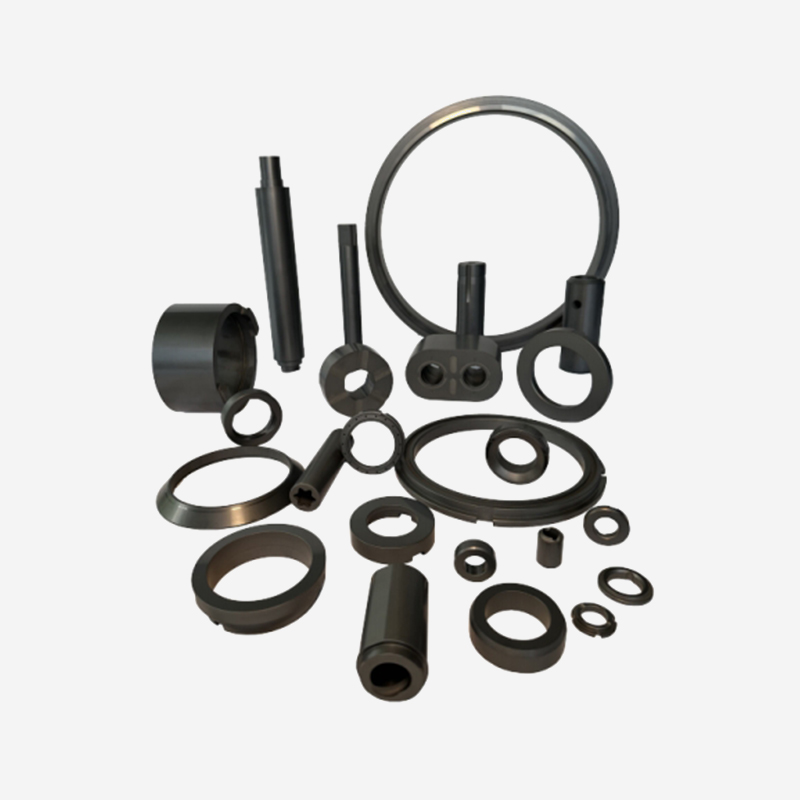
Silicon carbide materials have extremely high hardness and strength, excellent wear resistance and a...
Ready to Innovate Together? Contact Our Experts.

Contact Us
Address: 288 Shande Road, Shanyang Town, Jinshan District, Shanghai, China TEL/WhatsApp:Mobile terminal




 English
 日本語
日本語
 عربى
عربى
 中文简体
中文简体